









What's Happening?
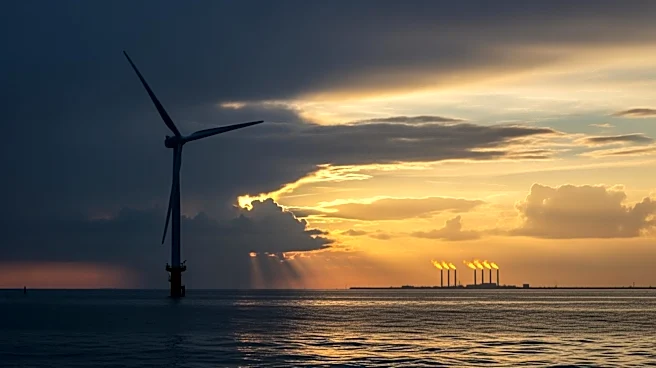
President Trump has taken significant steps to shift U.S. energy policy away from offshore wind projects, opting instead to focus on natural gas and geothermal energy. The Trump administration recently agreed to reimburse Invenergy $765 million to terminate
four offshore wind leases, adding to a total of nearly $2.6 billion spent on lease buybacks. This move aligns with Trump's broader energy strategy, which emphasizes reducing energy costs for American consumers and moving away from what he perceives as the vulnerabilities of offshore wind. The administration's actions include halting new or renewed approvals for wind projects and redirecting funds towards more 'dependable' energy sources. Critics argue that this approach neglects the potential of solar energy, which is projected to be the fastest-growing source of U.S. electricity generation.
Why It's Important?
The decision to end offshore wind leases and focus on natural gas has significant implications for the U.S. energy landscape. Offshore wind, while costly and politically exposed, represents a part of the renewable energy mix that could contribute to reducing carbon emissions. By shifting focus, the Trump administration is prioritizing immediate cost reductions over long-term clean energy goals. This could slow the transition to renewable energy, impacting the U.S.'s ability to meet climate targets. Additionally, the move may affect the renewable energy industry, potentially leading to job losses and reduced investment in wind technology. The emphasis on natural gas and geothermal energy reflects a strategic pivot that could reshape the U.S. energy market, influencing both domestic policy and international energy dynamics.
What's Next?
The administration's energy policy shift is likely to face legal and political challenges. Several states, particularly those with renewable energy mandates, may contest the lease buybacks and policy changes. The focus on natural gas could also lead to increased investment in related infrastructure, potentially sparking debates over environmental impacts and energy security. As the U.S. navigates its energy future, stakeholders in the renewable sector may push for policies that support a balanced energy mix, including solar and wind. The outcome of these policy shifts will depend on political dynamics and the administration's ability to implement its energy strategy effectively.