





What's Happening?
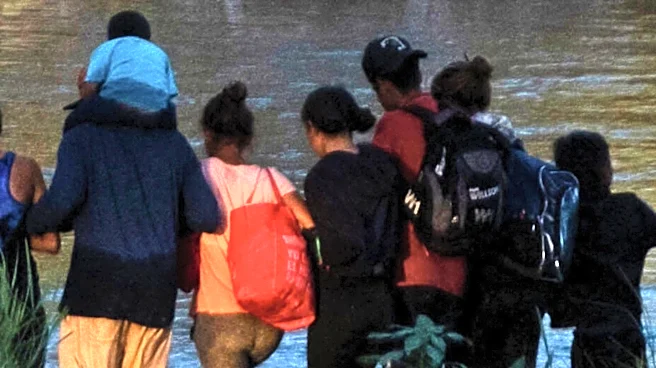
The U.S. government has imposed restrictions on the movement of its personnel to Nogales, Sonora, a Mexican border city, due to unspecified 'threat information.' U.S. officials are now permitted to undertake only essential travel during daylight hours.
The U.S. Embassy and consulates in Mexico issued this alert without disclosing the nature of the threat or the specific intelligence that prompted the measure. The U.S. Consulate General in Nogales stated, 'We are alerting U.S. citizens of this threat and change in posture.' This restriction is in addition to Sonora's existing Level 3 travel advisory, which advises U.S. citizens to reconsider travel due to security risks. Sonora authorities, however, have stated they possess no information indicating a specific risk to the public but will maintain preventive security operations.
Why It's Important?
This travel restriction by the U.S. government signals a heightened security concern in a key border region, directly impacting U.S. personnel and potentially influencing the safety perceptions of American citizens traveling to or residing in Nogales. The lack of specific details regarding the threat could create uncertainty and anxiety among the public and businesses operating in the area. For U.S.-Mexico relations, such alerts, even without explicit details, can strain diplomatic ties and economic interactions across the border. It also highlights the ongoing challenges of security in border cities, which are often complex due to cross-border criminal activities and varying levels of law enforcement capabilities. The advisory could lead to decreased tourism and cross-border commerce, affecting local economies on both sides.
What's Next?
The duration and potential expansion of these travel restrictions remain unclear. The U.S. government will likely continue to monitor the security situation in Nogales and may update its advisories as new information becomes available. Sonora authorities are expected to maintain and potentially increase their preventive security operations in response to the U.S. alert, aiming to reassure both residents and international visitors. The unspecified nature of the threat means that both U.S. and Mexican officials will be under pressure to provide more clarity or demonstrate effective measures to mitigate the perceived risks. This situation could also prompt further discussions between U.S. and Mexican security agencies regarding intelligence sharing and collaborative efforts to address border security challenges.
Beyond the Headlines
The U.S. government's decision to restrict personnel travel based on an undisclosed threat in Nogales raises deeper questions about intelligence transparency and its impact on public perception and international relations. The absence of specific details can fuel speculation and potentially exacerbate fear, even if the threat is localized or specific to government personnel. This incident also underscores the delicate balance between protecting government employees and informing the public without causing undue panic or revealing sensitive intelligence. Furthermore, it highlights the persistent security challenges along the U.S.-Mexico border, where complex issues like organized crime, migration, and economic interdependence intersect, often leading to dynamic and unpredictable security environments that require continuous vigilance and adaptive policy responses from both nations.