
What's Happening?
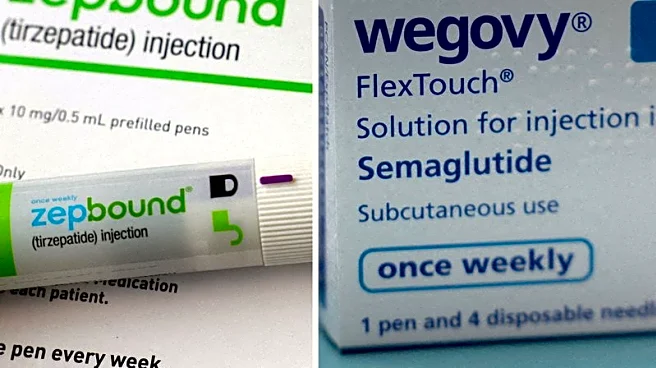
A recent study conducted by researchers from Oxford's Nuffield Department of Primary Care Health Sciences has found that patients who discontinue GLP-1 medications, used for weight loss, typically regain
their lost weight within 18 to 24 months. The study, published in The BMJ, analyzed data from 37 studies involving 9,341 adults. It was observed that weight was regained at a faster rate compared to those who ended behavioral weight loss programs supported by diet and exercise. Additionally, cardiometabolic markers such as blood pressure and cholesterol returned to baseline levels about 16 months after stopping the medication. The findings suggest that to maintain weight loss, patients may need to continue taking the medication long-term.
Why It's Important?
The study highlights the challenges in managing obesity, a chronic and relapsing condition. The findings are significant as they suggest that GLP-1 medications, originally developed for diabetes, may require long-term use to sustain weight loss. This has implications for healthcare providers and insurers who are debating whether to cover these expensive medications, which can cost over $1,000 a month. The research underscores the need for a comprehensive approach to weight management that includes lifestyle changes alongside medication. The potential financial burden on patients and healthcare systems could be substantial if long-term medication use becomes necessary.
What's Next?
The study's findings may influence ongoing discussions among insurers and government health services regarding the coverage of GLP-1 drugs for weight loss. As the debate continues, there may be increased pressure to develop more affordable and sustainable weight management solutions. Healthcare providers might also need to focus on integrating lifestyle interventions with medication to enhance long-term outcomes. Further research could explore alternative strategies to prevent weight regain after discontinuing medication.