






What's Happening?
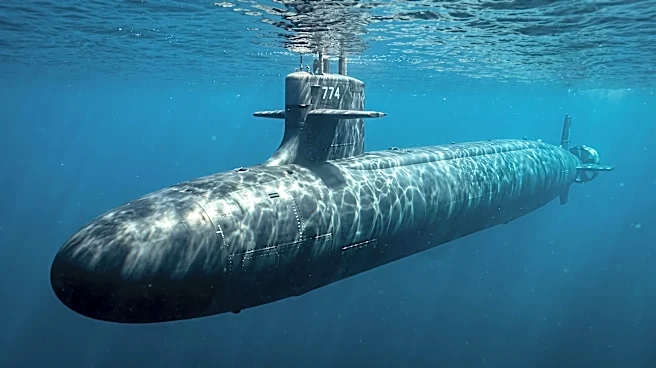
The U.S. Navy has relieved the top three officers of the nuclear-powered attack submarine USS South Dakota last month. Commander Dan Goodwin, the executive officer, and the chief of the boat were all removed from their positions on October 14. This action
follows an unspecified 'immediate navigational hazard' that occurred in September, as reported by The Day newspaper. The incident came to light through an award certification for a sailor on the submarine, who received the Navy and Marine Corps Commendation Medal. According to the sailor's family, the submarine was underwater when the sailor identified a potential navigation hazard involving shallow water or the ocean floor, issuing a warning that allowed the crew to save the submarine. Two members of Congress, Rep. Joe Courtney (D-Conn.) and Adam Smith (D-Wash.), have written to acting Navy Secretary Hung Cao and Chief of Naval Operations Adm. Daryl Caudle, accusing the Navy of failing to notify the House Armed Services Committee about the command team's removal for nearly a month. The USS South Dakota is a relatively new Virginia-class submarine, commissioned in 2019, and is assigned to Submarine Squadron 4.
Why It's Important?
The removal of the USS South Dakota's command team and the subsequent congressional inquiry highlight significant concerns regarding transparency and accountability within the U.S. Navy, particularly concerning incidents involving sensitive naval assets. The letter from Representatives Courtney and Smith emphasizes that the lack of timely communication with Congress is 'unacceptable,' especially given past incidents involving Navy vessels like the USS Fitzgerald, USS John S. McCain, USS Hartford, and USS Connecticut. This incident raises questions about the Navy's commitment to informing oversight bodies, which is crucial for maintaining public trust and ensuring proper resource allocation for fleet readiness and personnel safety. The congressmen's concerns extend to the potential impact on the structural integrity of the USS South Dakota, the well-being of its crew, and whether the incident points to systemic issues in training or standard procedures. For the Navy, such incidents can affect morale, recruitment, and the perception of its operational capabilities, potentially impacting its strategic posture and funding in the long term.
What's Next?
The congressional letter indicates that there are many unanswered questions regarding the incident, including potential damage to the USS South Dakota, injuries to the crew, and any systemic training or procedural failures. The Navy is expected to provide further details and explanations to Congress regarding the incident and the reasons for the delayed notification. This scrutiny could lead to internal investigations within the Navy to assess the full scope of the navigational hazard and the command team's actions. Depending on the findings, there could be policy changes regarding incident reporting protocols and transparency with congressional oversight committees. The incident may also prompt a review of training programs and operational procedures for Virginia-class submarines to prevent similar occurrences in the future. The ongoing dialogue between Congress and Navy leadership will likely focus on ensuring accountability and implementing necessary reforms to uphold fleet readiness and safety standards.
Beyond the Headlines
This event transcends a mere personnel change, touching upon broader issues of military culture, risk management, and the delicate balance between operational secrecy and public accountability. The Navy's initial lack of transparency, as highlighted by the congressional letter, could erode trust not only with legislative bodies but also with the public and the families of service members. In an era of increasing geopolitical competition, the operational integrity and perceived reliability of advanced naval assets like nuclear submarines are paramount. Any incident, even without reported damage, can raise questions about the U.S. Navy's readiness and its ability to project power effectively. Furthermore, the emphasis on a sailor's quick thinking to avert a disaster underscores the critical role of individual vigilance and the need for robust safety protocols, even on highly sophisticated vessels. This incident may prompt a re-evaluation of how the Navy communicates critical information, especially when it involves potential risks to national security assets and personnel.