


What's Happening?
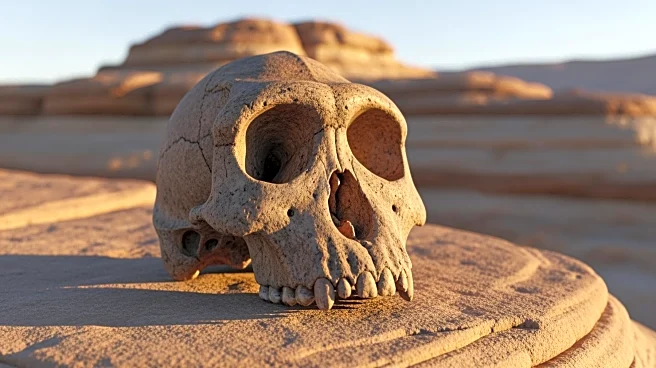
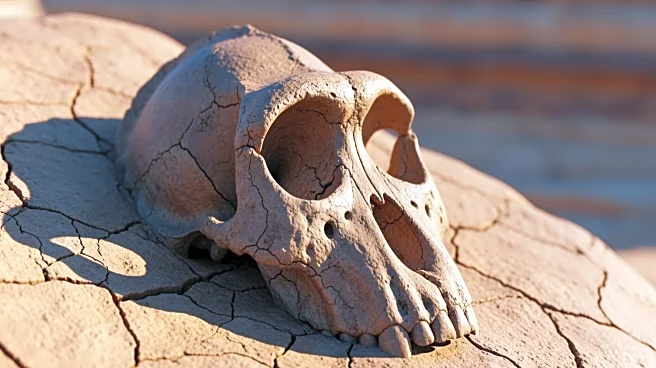
Scientists have discovered 18 million-year-old ape fossils in Egypt, suggesting that the ancestors of all living apes, including humans, may have originated in northeast Africa or Arabia. The fossils belong to a new genus and species, Masripithecus moghraensis,
and challenge the long-held belief that modern apes originated in East Africa. The discovery was made by a team led by Shorouq Al-Ashqar from Mansoura University in Egypt.
Why It's Important?
This discovery is significant as it could reshape our understanding of ape evolution and the geographic origins of modern apes. By suggesting a northern origin, the findings may prompt a reevaluation of the evolutionary pathways that led to the development of modern apes, including humans. This could have implications for the study of human evolution and the migration patterns of early hominids.
What's Next?
Further research and excavation in the region could uncover more fossils, providing additional insights into the evolutionary history of apes. Scientists are likely to focus on finding more complete fossils to confirm the initial findings and refine the evolutionary timeline. This could lead to a broader understanding of the environmental and ecological factors that influenced ape evolution.
Beyond the Headlines
The discovery also highlights the importance of interdisciplinary collaboration in paleontology, combining fossil analysis with genetic data from living apes. This approach could lead to more comprehensive models of evolution and help address gaps in the fossil record. Additionally, the findings may encourage more exploration in under-researched regions, potentially leading to further groundbreaking discoveries.