



What's Happening?
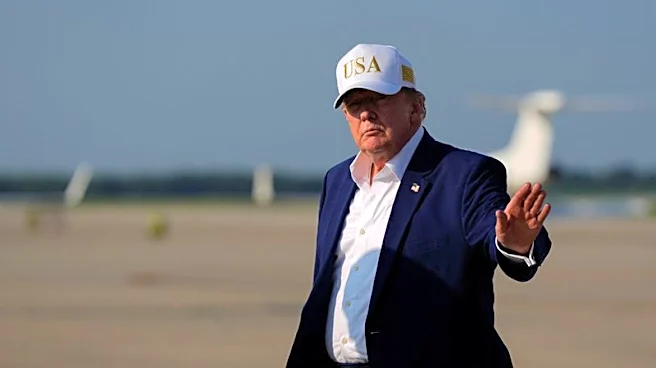
President Trump has intensified his 'America First' foreign policy by imposing aggressive tariffs and making strategic demands on international allies and adversaries. This approach has led to heightened tensions with BRICS nations, particularly China,
as Trump views them as 'anti-American' and has threatened 10% tariffs on aligned nations. His strategy includes escalating tariffs on China, restricting technology transfers, and disrupting oil supplies from partners like Iran and Venezuela to weaken Beijing's global influence. Trump's policies have also strained relations with Europe and NATO, as his demands for increased defense spending and unilateral actions have eroded trust and risked coalition breakdowns.
Why It's Important?
Trump's tariff strategy and foreign policy approach have significant implications for global economic stability and international relations. By prioritizing U.S. economic and security interests, Trump's actions could lead to retaliatory measures from affected countries, potentially sparking trade wars and economic instability. The erosion of trust among NATO allies and the potential breakdown of multilateral coalitions could weaken global security frameworks. Additionally, Trump's focus on bilateral trade deals and transactional diplomacy over multilateral commitments may shift global power dynamics, affecting international trade and economic growth.
What's Next?
The continuation of Trump's aggressive tariff policies and foreign policy stance is likely to provoke further international tensions and economic challenges. Countries affected by U.S. tariffs may seek to strengthen alliances with other global powers, such as China and Russia, to counterbalance U.S. influence. The potential for increased trade disputes and economic instability could impact global markets and economic growth. As Trump continues to prioritize 'America First,' the international community may need to navigate a more fragmented and competitive global landscape.