








What's Happening?
The New York City Department of Transportation (NYC DOT) has announced the return of Summer Streets, a program that transforms over 20 miles of city streets into car-free zones across all five boroughs. This initiative will take place over five Saturdays
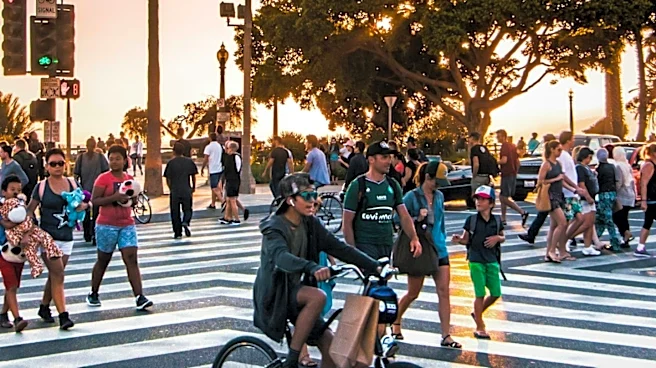
during the summer, allowing pedestrians and cyclists to enjoy the streets without the usual traffic congestion. The program will run from 7 a.m. to 3 p.m. in Manhattan and from 9 a.m. to 5 p.m. in Brooklyn, Queens, the Bronx, and Staten Island. Last year, the event attracted over 500,000 participants, including families, runners, and cyclists. The routes include notable areas such as Broadway in Staten Island, Vernon Boulevard in Queens, and the Grand Concourse in the Bronx, among others.
Why It's Important?
Summer Streets provides a unique opportunity for New Yorkers to experience their city in a new way, promoting physical activity and community engagement. By temporarily removing cars from these routes, the program encourages healthier lifestyles and reduces pollution, contributing to environmental sustainability. It also supports local businesses by increasing foot traffic in commercial areas. The initiative reflects a growing trend in urban planning that prioritizes pedestrian-friendly spaces, which can lead to long-term improvements in public health and urban living standards. The program's success could influence future transportation policies and urban development strategies in New York City and beyond.
What's Next?
As Summer Streets unfolds, city officials and participants will likely evaluate its impact on traffic patterns, local businesses, and community well-being. Feedback from these events could inform future iterations of the program and similar initiatives. Additionally, the success of Summer Streets may inspire other cities to adopt similar car-free days, promoting a shift towards more sustainable urban environments. Stakeholders, including local government, businesses, and residents, will be watching closely to assess the program's benefits and challenges.