
What's Happening?
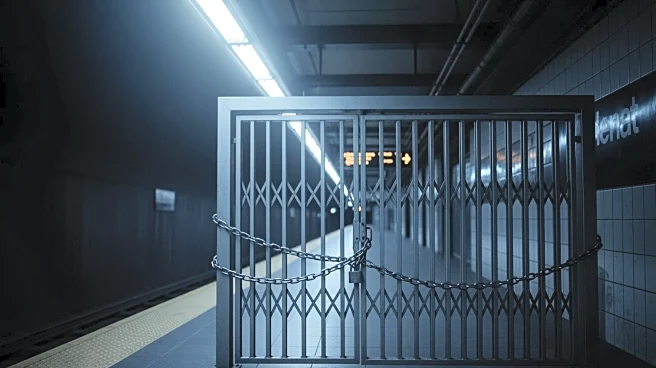
The Bay Area Rapid Transit (BART) system is facing a significant financial shortfall, prompting officials to propose a regional sales tax increase. Without this measure, BART warns it may have to close
up to 15 stations and lay off approximately 1,200 workers by 2027. The agency is grappling with a projected $376 million budget deficit due to a dramatic decline in ridership since the pandemic. BART's reliance on fare revenue has been severely impacted by the rise of remote work, leading to fewer daily commutes. The proposed tax increase aims to stabilize BART's finances by raising sales taxes in several Bay Area counties.
Why It's Important?
The potential service cuts and layoffs at BART highlight the ongoing challenges faced by public transit systems in the wake of the COVID-19 pandemic. The decline in ridership and subsequent financial strain underscore the need for sustainable funding models for public transportation. The proposed sales tax increase is a critical measure to prevent service disruptions that could affect thousands of commuters and exacerbate traffic congestion in the Bay Area. The outcome of this proposal will have significant implications for the region's transportation infrastructure and economic recovery.
What's Next?
The proposed sales tax measure will be on the ballot for Bay Area voters to decide. If approved, it could provide the necessary funding to maintain BART's operations and prevent the proposed station closures and layoffs. However, opposition from figures like former BART Board Director Debora Allen, who criticizes the agency's financial management, suggests that the measure may face challenges. The decision will ultimately rest with the voters, who must weigh the potential benefits of the tax increase against concerns about fiscal responsibility.