






What's Happening?
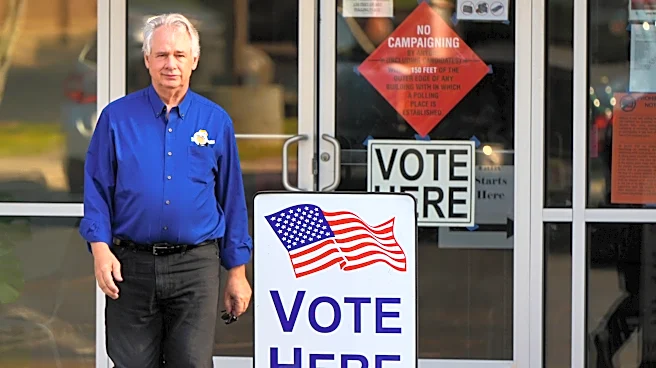
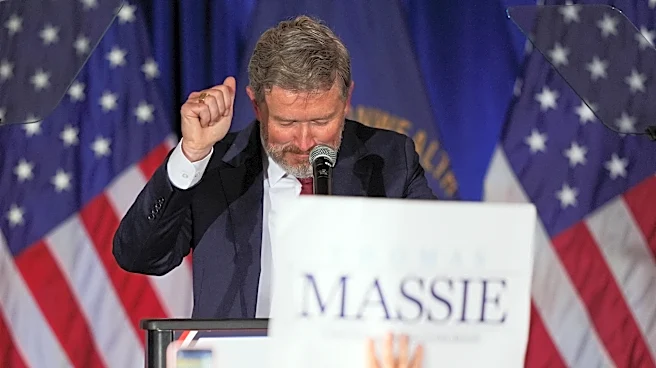
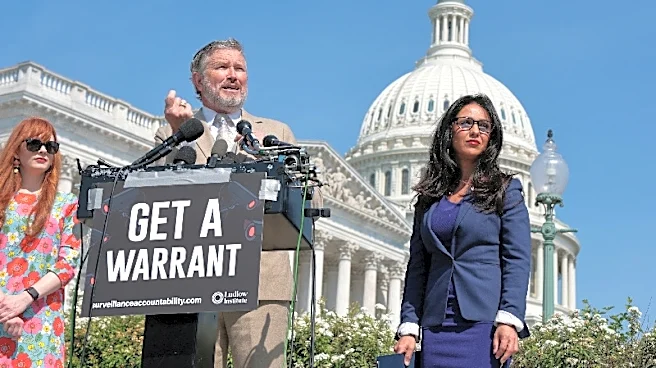
President Trump has demonstrated significant influence in recent Republican primaries, successfully backing candidates who align with his agenda. Notably, Representative Thomas Massie of Kentucky, a critic of Trump's policies, lost his primary to Ed Gallrein,
a Trump-endorsed candidate. Similarly, Senator Bill Cassidy of Louisiana, who voted to convict Trump in his 2021 impeachment trial, came third in his primary. These outcomes suggest Trump's continued grip on the Republican base, particularly in states like Indiana, Louisiana, and Kentucky. However, despite these victories, Trump's overall approval ratings have declined, with a New York Times/Siena poll showing a drop to 37 percent, his lowest ever in that poll. This duality reflects Trump's strong hold over the MAGA base while simultaneously experiencing a decline in broader public support.
Why It's Important?
The events underscore a complex dynamic within the Republican Party, where Trump's influence remains potent among primary voters but is less effective with the general electorate. This situation poses a challenge for the GOP as it navigates the upcoming midterm elections. While Trump's backing can secure primary victories, it may not translate to success in general elections, where broader issues like inflation and foreign policy could dominate voter concerns. The party risks alienating moderate voters and independents, potentially jeopardizing its chances in competitive races. This tension highlights the broader struggle within the GOP to balance Trump's influence with the need to appeal to a wider audience.
What's Next?
As the midterm elections approach, Republican candidates may face pressure to align with Trump's policies to secure primary victories, yet they must also consider strategies to appeal to a broader electorate. The potential for a more antagonistic Congress could emerge if Democrats gain control, which would challenge Trump's agenda. Additionally, the GOP may need to address internal divisions and develop a cohesive strategy that reconciles Trump's influence with the party's long-term electoral goals. The outcomes of these primaries could shape the party's direction and influence its legislative priorities.