







What's Happening?
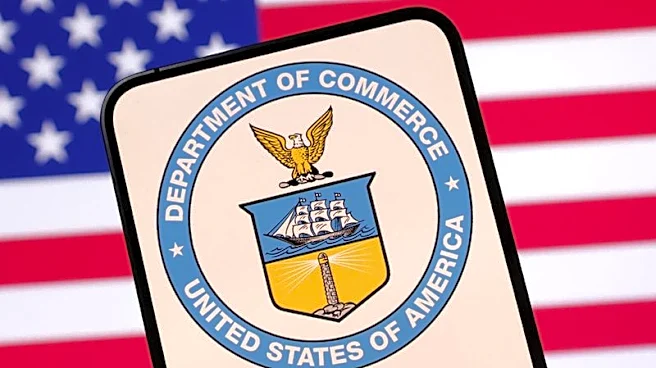
The U.S. Commerce Department has announced a move to ease export controls on the United Arab Emirates (UAE), stating it will favorably review export license applications for MGX, a UAE-backed investment firm. This decision is linked to MGX's use of USD1,
a stablecoin associated with President Trump's family, for a $2 billion investment in Binance, the largest crypto exchange by daily volume. The rule, set to be officially published on July 14, includes provisions for MGX semiconductors and servers bound for the UAE. Sen. Elizabeth Warren has criticized the rule, labeling it 'corrupt' due to the involvement of the Trump-connected stablecoin. Warren has raised concerns about potential national security risks and the influence of Trump's financial interests on U.S. policy toward the UAE.
Why It's Important?
The easing of export controls for the UAE has significant implications for U.S. national security and foreign policy. The decision could enhance the UAE's access to advanced computing equipment, potentially affecting the balance of technological power in the region. Sen. Warren's criticism highlights concerns about the intersection of private financial interests and public policy, particularly regarding sensitive technology exports. The involvement of a Trump-affiliated stablecoin in major international transactions raises questions about the influence of personal financial gains on governmental decisions. This development could impact U.S. relations with the UAE and other countries, as well as the integrity of export control policies designed to protect national security.
What's Next?
Sen. Warren has called for Commerce Secretary Howard Lutnick and BIS Under Secretary Jeffrey Kessler to testify before Congress to address concerns about the rule and its implications for national security. The Senate Banking Committee may hold hearings to investigate whether UAE-linked investments influenced administration decisions on advanced technology exports. Kessler is already scheduled to testify before the House Committee on Foreign Affairs next week. The rule's publication and subsequent congressional scrutiny could lead to adjustments in export control policies or further legislative action to ensure national security interests are safeguarded.
Beyond the Headlines
The easing of export controls for the UAE could have broader implications for international trade and technology transfer. It may set a precedent for how financial interests are intertwined with policy decisions, potentially affecting global perceptions of U.S. trade practices. The involvement of AI and semiconductor technologies in the rule highlights the growing importance of these sectors in geopolitical strategies. Additionally, the rule's impact on companies like Amazon, Apple, and Google, which may receive streamlined treatment for controlled equipment, underscores the interconnectedness of global tech operations and regulatory frameworks.