



What's Happening?
An Estonian intelligence report has highlighted that Russia continues to view the United States as its primary global adversary, despite recent diplomatic engagements. The report, titled 'International Security and Estonia 2026,' suggests that Russia's
strategic dialogues with the U.S. are designed to exploit perceived vulnerabilities within the current U.S. administration. These dialogues aim to restore bilateral relations that could facilitate Russian espionage and influence operations, potentially compromising U.S. global standing. The report also notes that Russia seeks to exploit divisions between the U.S. and its European allies, thereby weakening transatlantic unity. Estonia's intelligence agency, known for its accurate predictions regarding Russian military actions, underscores the ongoing threat Russia poses to both U.S. and European interests.
Why It's Important?
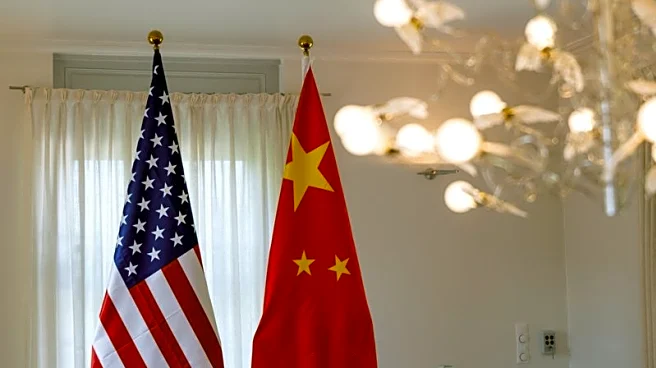
The findings of the Estonian intelligence report are significant as they underscore the persistent threat Russia poses to U.S. and European security interests. The report suggests that Russia's strategic maneuvers could undermine U.S. influence on the global stage and weaken alliances with European nations. This situation is further complicated by the deepening partnership between Russia and China, which presents a unified front against Western influence. The report's insights are crucial for U.S. policymakers as they navigate complex geopolitical dynamics and reassess strategic frameworks to address these challenges. The potential for Russia to exploit U.S.-European divides could have far-reaching implications for transatlantic security and global stability.
What's Next?
As the U.S. continues to engage with Russia, it must remain vigilant about the implications for transatlantic security and the broader geopolitical landscape. The evolving interactions between Russia, China, and the U.S. call for a reassessment of existing strategic frameworks to ensure they adequately address impending challenges. The U.S. may need to strengthen its alliances with European nations and other global partners to counteract Russian influence and maintain a unified front. Additionally, the U.S. must consider the potential impact of its foreign policy decisions on its relationships with other nations, such as Brazil, which may align more closely with Beijing in response to U.S. pressure.