


What's Happening?
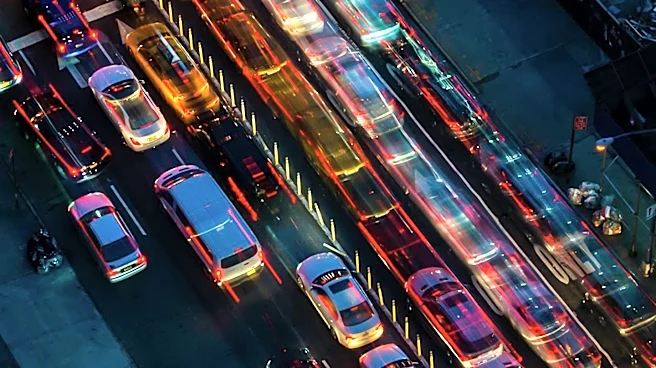
A recent report from the New York City Department of Health (DOH) indicates that congestion pricing, implemented in Manhattan south of 60th Street, has not significantly reduced air pollution in the congestion zone, despite an 11% decrease in car trips.
Critics, including Staten Island Borough President Vito Fossella and members of New Yorkers Against Congestion Pricing Tax, argue this report proves the toll was primarily a 'money grab' to fund the Metropolitan Transportation Authority (MTA). They point out that truck traffic has reportedly increased in Staten Island, questioning the MTA's claims of pollution reduction. Conversely, the MTA, through its Chair and CEO Janno Lieber, maintains that the report validates the program's effectiveness by confirming that traffic diversion did not lead to increased pollution in environmental justice zones outside Manhattan, a concern raised in earlier studies. John Kaehny, executive director of Reinvent Albany, a pro-mass transit watchdog group, also noted that initial projections of pollution hotspots due to traffic diversion did not materialize.
Why It's Important?
This report is important because it challenges a key justification for New York City's congestion pricing scheme: its environmental benefits. If the primary goal of reducing air pollution is not being met, it undermines the policy's public support and raises questions about its true purpose. For residents and businesses, particularly those in the outer boroughs like Staten Island, the perceived lack of environmental improvement coupled with increased costs and potential traffic diversion impacts could fuel further opposition. The debate highlights the tension between funding public transit and addressing environmental concerns, and how these policies affect different communities. The financial burden on businesses, such as the Sea Breeze Fish Market owner who reported significant daily costs, could lead to economic strain for small enterprises operating within or near the congestion zone. This situation could also influence future urban planning and environmental policy decisions in other major U.S. cities considering similar congestion pricing models.
What's Next?
The findings of the DOH report are likely to intensify the ongoing legal and public challenges against New York City's congestion pricing. Opponents, including those involved in lawsuits to block the toll, will likely use this report as further evidence to support their claims that the program is ineffective in its stated environmental goals and primarily serves as a revenue generator for the MTA. The MTA, however, is expected to continue defending the program, emphasizing that the absence of increased pollution in environmental justice zones is a positive outcome and that the revenue generated is crucial for public transit investments. The toll is already scheduled to increase to $12 in 2028 and $15 in 2031, which will likely face renewed scrutiny and potential resistance given these new findings. Future discussions will likely focus on the balance between funding public transportation, managing traffic, and achieving tangible environmental improvements, potentially leading to calls for re-evaluation or modifications to the current congestion pricing structure.
Beyond the Headlines
The controversy surrounding New York City's congestion pricing and its environmental impact extends beyond immediate policy debates, touching upon broader issues of urban equity and governance. The report's finding that pollution levels were not significantly different in environmental justice zones outside Manhattan, while interpreted positively by some, could also be seen as a missed opportunity for substantial environmental improvement in vulnerable communities. The perception that the policy is a 'money grab' rather than an effective environmental solution could erode public trust in government initiatives, particularly among those who bear the financial burden without seeing clear benefits. This situation highlights the complex interplay between economic policy, environmental justice, and public perception in densely populated urban areas. It also underscores the challenge of implementing large-scale urban interventions, where the intended outcomes may not always align with real-world impacts, leading to ethical questions about who benefits and who is disproportionately affected by such policies.