






What's Happening?
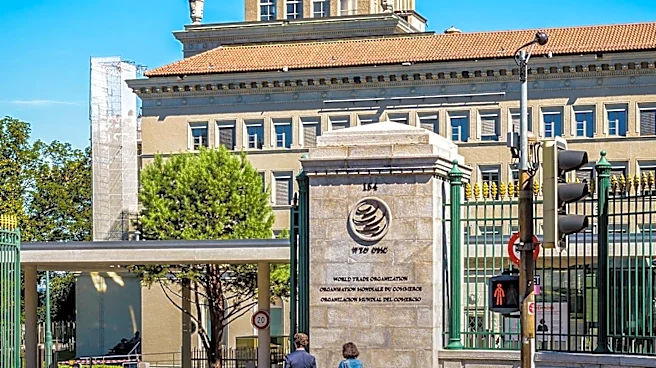
Brazil's trade envoy to the World Trade Organization (WTO), Ambassador Guilherme de Aguiar Patriota, stated that plurilateral agreements are not a universal solution for global trade issues. Speaking at the WTO's annual Public Forum, Ambassador Patriota emphasized
the importance of a strong, enforceable multilateral system for stability and cooperation in international trade. He provided a comprehensive overview of global trade negotiations and their evolution since World War II, highlighting that a multilaterally agreed and enforceable system of rules offers the certainty sought by the private sector. The Ambassador acknowledged that while plurilateral formats are not new to the WTO and are built into the existing system, they should not undermine the multilateral nature of the organization. He stressed that the issue of whether negotiations should be plurilateral or not, within a multilateral system, is a matter of substance, balance, and fairness, depending on what is being discussed and how. He also noted that the current dispute settlement system is not fully enforceable, which weakens the overall system.
Why It's Important?
Ambassador Patriota's remarks underscore a critical debate within global trade governance, particularly concerning the balance between multilateral and plurilateral approaches. For the U.S., which has historically championed a rules-based international trading system, the weakening of the WTO's dispute settlement mechanism poses significant challenges. A less enforceable multilateral system could lead to increased unilateral trade measures, potentially impacting U.S. businesses and economic interests by creating an unpredictable global trade environment. The Brazilian envoy's warning suggests that an overreliance on plurilateral agreements, which involve a subset of WTO members, might fragment the global trading system and disadvantage countries that are not part of these agreements. This could affect U.S. trade relations and its ability to leverage the WTO for resolving disputes and promoting its trade agenda. The emphasis on a strong, enforceable multilateral system aligns with the broader U.S. interest in maintaining global economic stability and ensuring fair competition.
What's Next?
The ongoing discussions at the WTO Public Forum and the perspectives shared by key trade envoys like Ambassador Patriota will likely influence future negotiations and reforms within the organization. Efforts to re-examine and update the existing rulebook, potentially introducing more flexibilities, are anticipated. This includes addressing new developments related to the digital economy, green transitions, and oversupply, while also creating space for developing countries to pursue their national development objectives. The U.S. will need to actively engage in these discussions to shape the future of the WTO, particularly regarding the re-establishment of a fully functional dispute settlement system. The debate between multilateralism and plurilateralism will continue, with countries like Brazil advocating for a balanced approach that preserves the core principles of the multilateral trading system while allowing for necessary evolution. The outcome of these negotiations will determine the stability and predictability of global trade for years to come.
Beyond the Headlines
The deeper implications of Ambassador Patriota's statement touch upon the fundamental principles of international cooperation and the future of global economic governance. The association between trade and peace, established before World War II, highlights the ethical and historical dimensions of trade policy. The warning against 'beggar-thy-neighbor policies' of the 1930s serves as a reminder of the potential for trade friction to escalate into broader geopolitical tensions. A fragmented trade system, driven by great power competition and geostrategic considerations, could undermine the efficiency and cooperation that a robust multilateral framework provides. For the U.S., this means navigating a complex landscape where economic interests are intertwined with national security and diplomatic objectives. The challenge lies in adapting the existing rules-based system to contemporary issues like climate change and sustainable development, while ensuring equitable outcomes for all members. The long-term shift could see a re-evaluation of how trade agreements are negotiated and enforced, with a renewed focus on inclusivity and the broader societal impacts of trade.