



What's Happening?
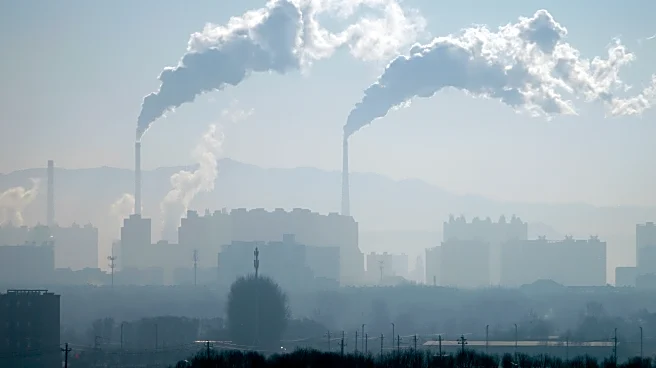
In 2025, the United States experienced a 2.4% increase in carbon emissions from fossil fuels, reversing a previous trend of declining emissions. This rise was primarily attributed to a colder winter, which increased heating demands, and the rapid expansion
of data centers and cryptocurrency mining, which heightened electricity consumption. Additionally, higher natural gas prices led to a 13% increase in coal power usage, further contributing to the emissions spike. The Rhodium Group, an independent research firm, highlighted these factors in their study, noting that recent environmental policy rollbacks by President Trump's administration were not significant contributors to the 2025 emissions increase, as they were only implemented that year.
Why It's Important?
The increase in carbon emissions is significant as it marks a departure from the trend of decreasing emissions in the U.S., which had seen a 20% drop from 2005 to 2024. This reversal poses challenges to ongoing efforts to combat climate change and transition to cleaner energy sources. The rise in emissions, despite economic growth, suggests a potential decoupling of economic activity from carbon pollution reduction. The situation underscores the importance of sustainable energy policies and the potential economic and environmental impacts of relying on fossil fuels. The increase also raises concerns about the U.S.'s ability to meet future emissions reduction targets and its role in global climate change efforts.
What's Next?
Looking forward, the impact of President Trump's environmental policy rollbacks may become more apparent in future emissions data. The Rhodium Group's projections indicate that U.S. greenhouse gas emissions could see a smaller reduction by 2035 than previously expected. The ongoing economic viability of renewable energy sources, despite policy changes, will be crucial in determining future emissions trends. The administration's stance on renewable energy subsidies and fossil fuel reliance will likely influence the U.S.'s environmental and economic landscape. Stakeholders in the energy sector and environmental advocacy groups will be closely monitoring these developments.
Beyond the Headlines
The increase in carbon emissions highlights broader implications for U.S. energy policy and its alignment with global climate goals. The reliance on fossil fuels, despite the economic competitiveness of renewables, suggests potential missed opportunities for innovation and leadership in clean energy technologies. The situation also raises ethical considerations regarding environmental stewardship and intergenerational equity, as current policy decisions may have long-term impacts on climate stability and public health. The U.S.'s approach to energy policy could influence international perceptions and cooperation in addressing climate change.