




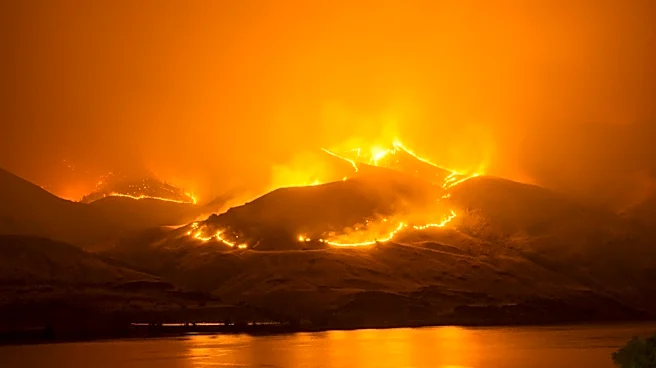

What's Happening?
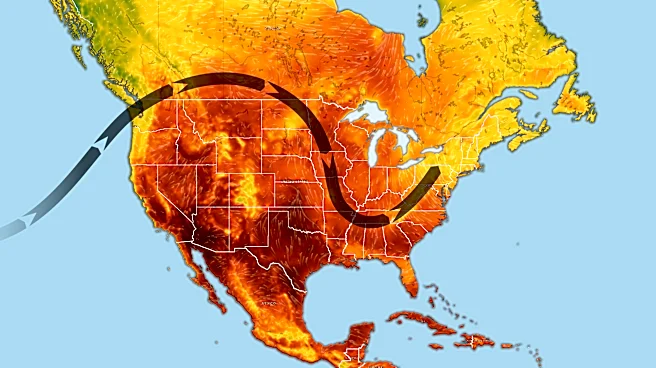
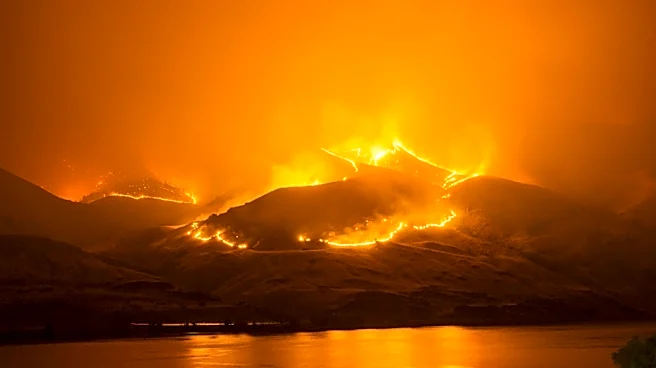
Cliff Mass, a University of Washington atmospheric sciences professor, has criticized a Seattle Times article that attributes Washington's early wildfire season to climate change. Mass argues that the article, written by climate reporter Conrad Swanson,
contains serious misinformation. He contends that the fires started in grasslands, not drought-stricken forests, and that factors like invasive cheatgrass and lightning, rather than climate change, are responsible. Mass accuses the Seattle Times of advocacy journalism, influenced by funding from climate-focused groups, and argues that the paper's framing diverts attention from actionable solutions to reduce fire risk.
Why It's Important?
This critique highlights the ongoing debate over the role of climate change in natural disasters and the responsibility of media outlets to provide accurate scientific reporting. Mass's comments suggest that misattributing causes of wildfires to climate change can lead to ineffective policy responses and neglect of practical measures, such as forest management and infrastructure maintenance. The discussion underscores the importance of distinguishing between natural climate variability and human-induced changes in public discourse and policy-making.
Beyond the Headlines
Mass's critique raises questions about the influence of funding on journalistic integrity and the potential for bias in climate reporting. It also points to the need for a nuanced understanding of environmental issues, where multiple factors, including human activities and natural cycles, contribute to complex phenomena like wildfires. The debate reflects broader tensions in how society addresses climate change and environmental management.