





What's Happening?
During the annual summer conference of the Colorado Water Congress in Steamboat Springs, elected officials from both sides of the aisle, including Democratic U.S. Rep. Joe Neguse and GOP U.S. Rep. Lauren Boebert, largely omitted human-caused climate change
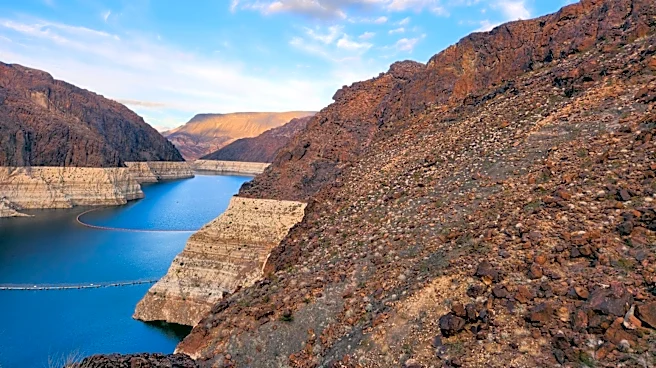
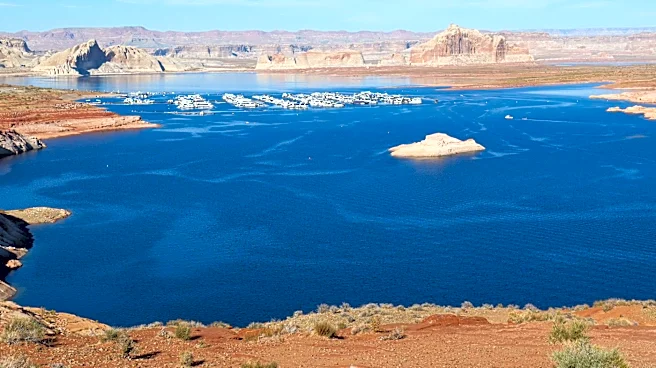
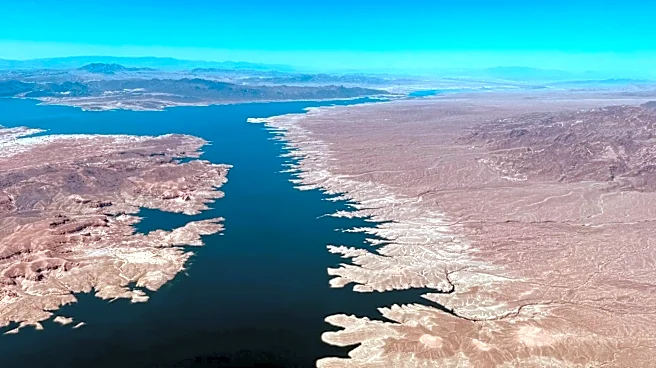
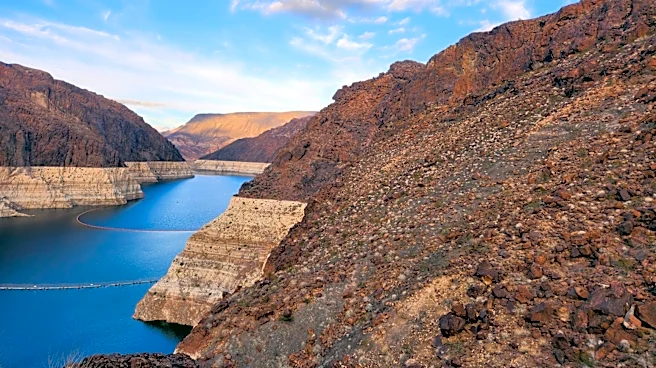
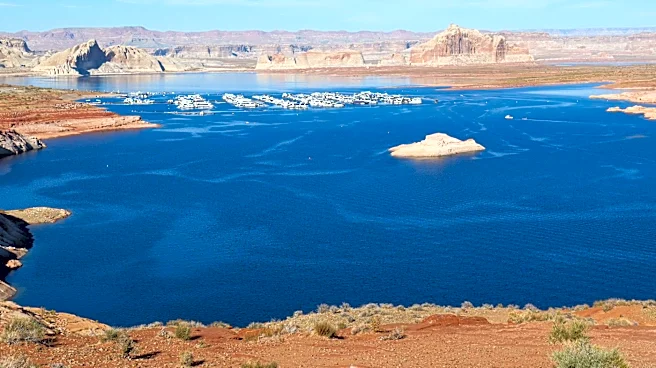
from their discussions on the Colorado River crisis. Despite three days of speeches on water policy, focusing on collaboration, innovation, storage, diversion projects, conservation measures, and drought-resistant crops, the predominant reason for the worsening situation—rising global temperatures—was not mentioned. This 'climate hushing' occurred even as hydrologists and climatologists increasingly attribute the West's water woes to human emissions rather than natural variability. The Colorado River's cumulative flow is at a record low, leading to an impending high-stakes court battle among the seven states dependent on its water.
Why It's Important?
The omission of climate change from discussions about the Colorado River crisis by political leaders is significant because it sidesteps the root cause of the problem, potentially hindering the development of effective, long-term solutions. Scientific consensus increasingly points to human-caused emissions as the primary driver of the megadrought and declining river flows. By not acknowledging this, policymakers may focus on symptomatic treatments rather than addressing the underlying issue, which could lead to unsustainable water management strategies. This approach affects millions of people, agricultural industries, and ecosystems reliant on the river. It also impacts public understanding and political will to implement necessary climate mitigation and adaptation measures, potentially exacerbating future water shortages and conflicts in the Western U.S.
What's Next?
Despite the lack of explicit mention of climate change by some political leaders, the scientific community continues to emphasize its role in the Colorado River crisis. Future discussions and policy decisions will inevitably need to confront the reality of human-caused climate change to develop truly effective and sustainable water management strategies. This may involve increased pressure from scientific bodies, environmental groups, and affected communities for policymakers to integrate climate science into their planning. The ongoing legal battles among states over water allocation will likely intensify, further highlighting the urgency of comprehensive solutions that account for changing climatic conditions. Public awareness and advocacy for climate-informed water policies are also expected to grow.
Beyond the Headlines
The 'climate hushing' observed at the Colorado Water Congress reflects a broader political dynamic where the scientific consensus on climate change is sometimes downplayed or ignored in public discourse, particularly when it comes to policy implications. This phenomenon can lead to a disconnect between scientific understanding and political action, delaying critical responses to environmental crises. The long-term implications for the Colorado River Basin are dire if the root causes are not addressed, potentially leading to irreversible ecological damage, severe economic consequences for agriculture and urban centers, and increased social instability. This situation also raises ethical questions about political accountability and the responsibility to future generations in the face of undeniable scientific evidence.