
What's Happening?
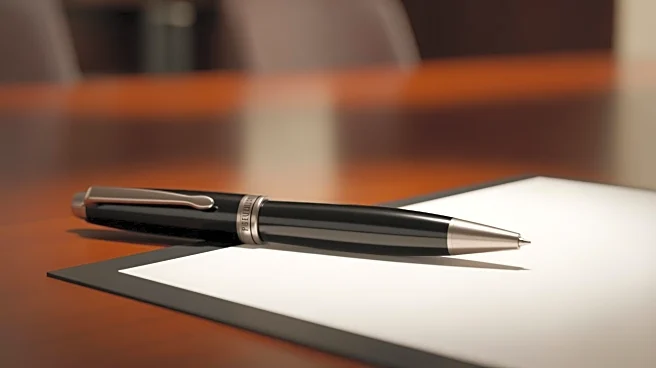
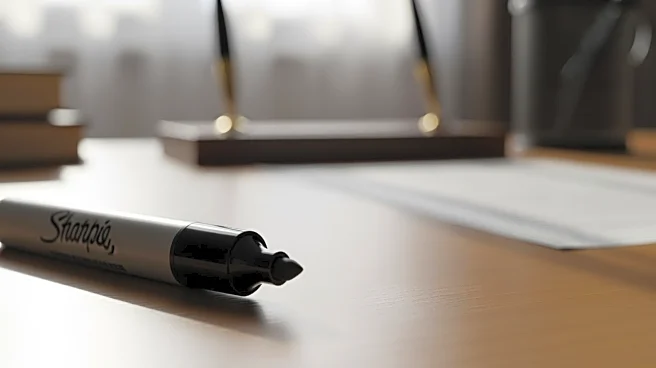
President Donald Trump has opted for custom Sharpie pens over the traditional ballpoint pens for signing official documents. During a Cabinet meeting, Trump expressed his preference for Sharpies, citing their reliability compared to the expensive ballpoint pens previously
used in the Oval Office. He noted that the ballpoint pens, which cost $1,000 each, often failed to write during critical moments, leading to awkward situations. Trump contacted the head of Sharpie to request a custom design that would be more suitable for high-profile signings. The Sharpie executive agreed to create a pen in black with the White House and Trump's signature in gold, at a cost of $5 per pen. This move comes despite past criticism of Trump using a Sharpie to alter a map of Hurricane Dorian's path.
Why It's Important?
The decision to use Sharpies highlights President Trump's focus on practicality and cost-effectiveness, even in seemingly minor aspects of his administration. By choosing a more reliable and less expensive option, Trump aims to avoid the embarrassment of malfunctioning pens during significant signings. This change also reflects Trump's negotiation skills, as he managed to secure a custom product at a fraction of the cost of the previous pens. The move has garnered attention, with the stock price of Sharpie's parent company, Newell Brands, reportedly increasing during Trump's remarks. This incident underscores the influence of presidential preferences on consumer brands and market dynamics.
What's Next?
While the immediate impact of this decision is limited to the White House, it may prompt other government offices to reconsider their procurement choices for office supplies. The attention drawn to Sharpie could lead to increased sales and brand recognition, potentially influencing other sectors to adopt similar cost-saving measures. Additionally, the public's reaction to this change may reflect broader sentiments about government spending and efficiency. As Trump continues to navigate complex issues like international conflicts and domestic policies, his focus on seemingly minor details may be scrutinized for insights into his leadership style.