







What's Happening?
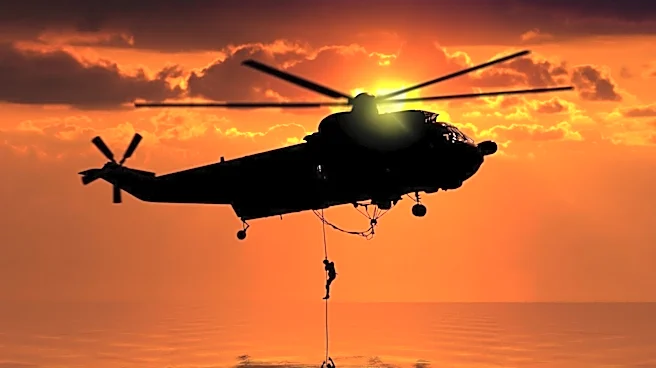
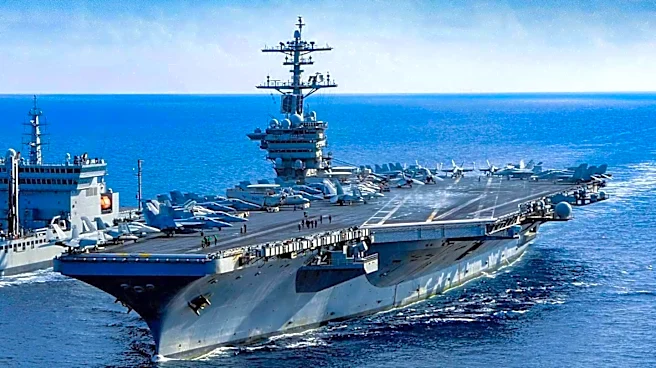
A U.S. Navy MH-60S Sea Hawk helicopter made an emergency water landing in the Arabian Sea early Wednesday morning. The incident involved a four-person crew, three of whom have been rescued and are in stable condition aboard the USS George H.W. Bush. The search
for the fourth crew member is ongoing. The U.S. Naval Forces Central Command reported that there is no indication of hostile action causing the helicopter's emergency landing. The USS George H.W. Bush has been stationed in the Middle East since late April and is one of two aircraft carriers in the region. Despite the U.S. lifting its blockade of vessels in the Strait of Hormuz, a significant military presence remains.
Why It's Important?
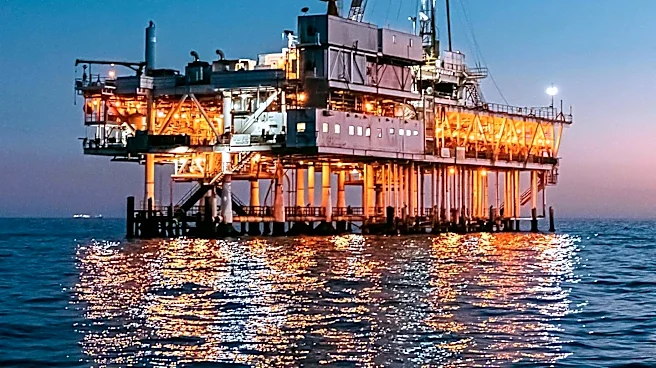
The incident underscores the risks associated with military operations in the Middle East, a region with ongoing geopolitical tensions. The presence of U.S. military assets, such as the USS George H.W. Bush, highlights the strategic importance of the area, particularly concerning the Strait of Hormuz, a critical chokepoint for global oil shipments. The search for the missing crew member also emphasizes the challenges faced by military personnel in high-stakes environments. This event may prompt discussions on the safety protocols and operational readiness of U.S. military forces deployed overseas.
What's Next?
The U.S. Navy will likely continue its search and rescue operations to locate the missing crew member. An investigation into the cause of the emergency landing will be conducted to determine any mechanical or operational failures. The incident may lead to a review of current military strategies and asset deployments in the region, potentially influencing future U.S. military presence and engagement in the Middle East.