
What's Happening?
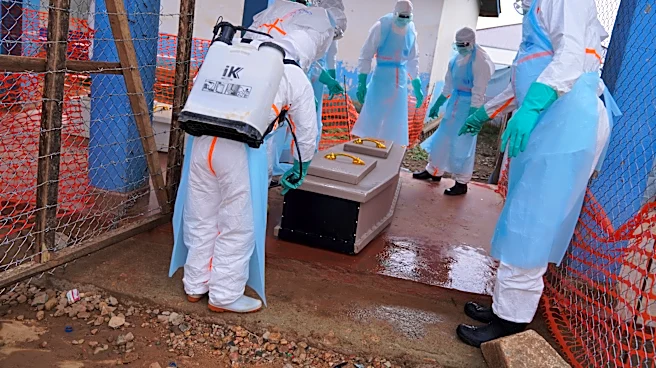
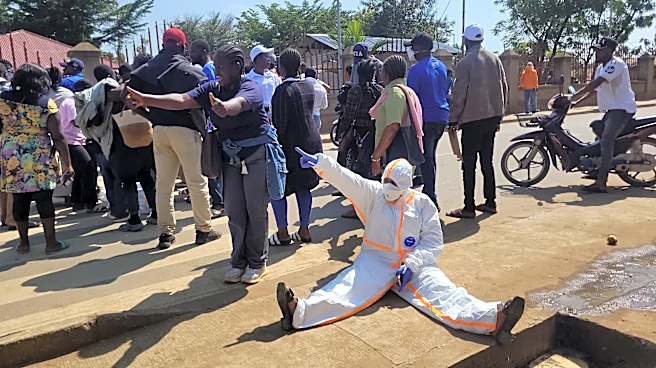
In the Democratic Republic of Congo, health workers in the Ituri province have staged protests due to unpaid wages, disrupting efforts to combat the ongoing Ebola outbreak. The protests occurred at the governor's
office in Bunia, the provincial capital, where health workers, including nurses, have not received their wages and bonuses since the outbreak was declared in May. This region accounts for nearly 90% of the Ebola cases in the country. The outbreak has been described as the fastest in terms of transmission, with over 4,000 confirmed cases and more than 1,800 deaths. The protests have further complicated the response to the outbreak, as critical care for Ebola patients is being disrupted.
Why It's Important?
The protests highlight significant challenges in managing public health crises in regions affected by conflict and logistical issues. The lack of payment to health workers not only demoralizes the workforce but also hampers the effectiveness of the Ebola response, potentially leading to further spread of the virus. This situation underscores the need for reliable funding and support for frontline workers in health emergencies. The disruption in healthcare services could exacerbate the outbreak, posing a threat to both local and global health security.
What's Next?
The Congolese government and international health organizations may need to address the payment issues urgently to ensure that health workers can continue their critical work. There may also be increased pressure on the government to improve logistical support and security for health workers, especially in conflict-affected areas. The international community might be called upon to provide additional resources and support to stabilize the situation and prevent further escalation of the outbreak.