







What's Happening?
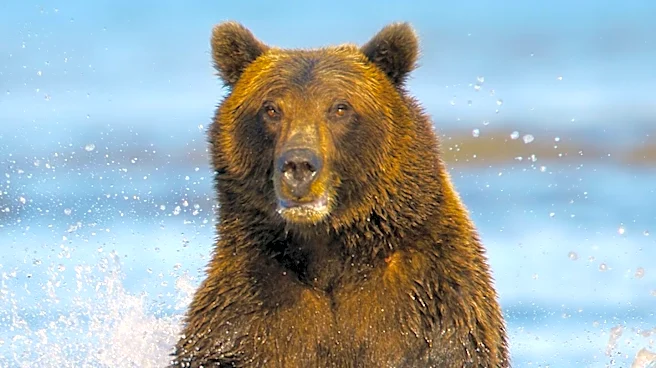
Klaire Rhodes, a prominent Anchorage trail runner and three-time Mount Marathon winner, was mauled by a brown bear last Thursday morning on the Wolverine Bowl trail in Chugach State Park. Rhodes, who races internationally, disclosed the incident in an Instagram
post, describing her injuries as 'relatively minor,' including a deep puncture wound on her hip and claw and teeth marks on her body. She attributed her fortunate outcome to the bear spray she was carrying and used during the attack. Rhodes managed to return to the trailhead independently, where firefighters met her. She declined an ambulance, opting for private transport. Wildlife biologists have since interviewed Rhodes and visited the attack site to collect samples and search for the bear. The incident occurred on a trail Rhodes runs weekly, and she expressed that while running in the Chugach feels like home, it is also the home of wildlife, acknowledging the inherent risks.
Why It's Important?
This incident underscores the increasing frequency of human-wildlife encounters in areas where urban development encroaches on natural habitats, particularly in regions like Alaska with significant bear populations. For outdoor enthusiasts, it highlights the critical importance of carrying and knowing how to use protective measures like bear spray. The fact that an experienced athlete like Rhodes, who is familiar with the terrain and its wildlife, was attacked, serves as a stark reminder that even with precautions, risks persist. The event also brings attention to the broader issue of coexisting with wildlife and the need for public awareness campaigns regarding safety protocols in bear country. The relatively minor nature of Rhodes's injuries, despite the severity of a bear mauling, may reinforce the effectiveness of bear spray as a deterrent, potentially influencing more outdoor recreationists to adopt its use.
What's Next?
The Alaska Department of Fish and Game will continue its investigation into the incident, including efforts to locate and assess the bear involved. The impact on Rhodes's immediate training and racing schedule, including an upcoming 100-kilometer alpine ultramarathon in France, remains unclear. Her recovery will be a key factor in determining her return to competitive running. Authorities may also review trail safety guidelines and public advisories for Chugach State Park, potentially issuing updated recommendations for visitors. The incident is likely to spark further discussions among the running community and wildlife management agencies about best practices for minimizing risks during outdoor activities in bear habitats. The story has already begun circulating in running magazines and international outlets, indicating ongoing public interest and potential for broader safety awareness campaigns.
Beyond the Headlines
The mauling of Klaire Rhodes by a brown bear delves into the complex relationship between humans and the natural environment, particularly in wilderness areas. It highlights the psychological impact of such encounters, as Rhodes described the moment as a 'nightmare come to life,' despite her resilience. The incident also raises ethical considerations regarding wildlife management, specifically the decision to locate and potentially kill bears involved in attacks, balancing human safety with conservation efforts. Furthermore, it subtly touches upon the concept of 'risk acceptance' among outdoor enthusiasts who choose to engage in activities in wild spaces, understanding the inherent dangers. The effectiveness of bear spray, as praised by Rhodes, could lead to a cultural shift in how outdoor safety is perceived and practiced, moving beyond traditional deterrents to more active self-defense mechanisms in wildlife encounters.