
What's Happening?
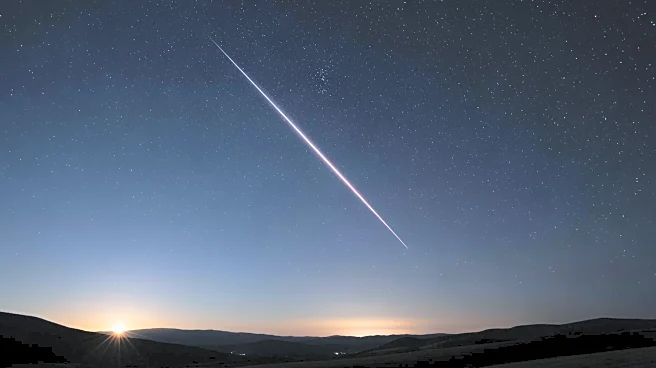
The Geminid meteor shower is set to peak on December 13 and 14, offering skywatchers a chance to see one of the most reliable annual meteor showers. According to NASA, under ideal conditions, the Geminids can produce over 120 meteors per hour. The shower originates
from the debris of the object 3200 Phaethon, which is debated to be either a near-Earth asteroid or an extinct comet. The best viewing times are late at night when the radiant in the Gemini constellation is highest in the sky.
Why It's Important?
Meteor showers like the Geminids provide opportunities for public engagement with astronomy and increase interest in space science. They offer a natural spectacle that can be enjoyed without special equipment, making them accessible to a wide audience. The study of meteor showers also contributes to our understanding of the solar system, particularly the nature of objects like 3200 Phaethon. Such events can inspire future generations to pursue careers in science and technology.