



What's Happening?
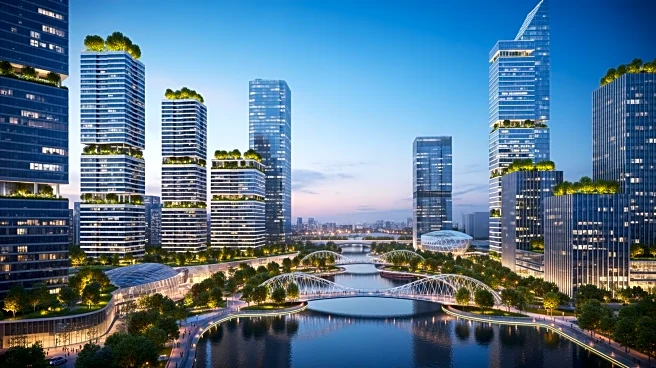
Guangzhou, a city in China, has been highlighted for its advanced urban planning and sustainable living practices. The city integrates technology and green spaces to create a livable environment that contrasts with traditional urban sprawl. Guangzhou's
design includes vertical living spaces with greenery, efficient mass transit systems, and widespread use of electric vehicles. The city also features parks and greenways that connect various parts of the city, promoting walking and reducing reliance on motorized transport. This approach not only enhances the quality of life but also reduces environmental impact, showcasing a potential model for future urban development.
Why It's Important?
Guangzhou's urban planning serves as a model for cities worldwide, including those in the U.S., facing challenges of urban sprawl and environmental degradation. By prioritizing sustainability and efficiency, Guangzhou demonstrates how cities can reduce carbon emissions and improve residents' quality of life. The integration of technology and green spaces can inspire U.S. cities to adopt similar practices, potentially leading to reduced pollution and enhanced urban living. This approach could influence urban planners and policymakers in the U.S. to rethink city designs, focusing on sustainability and livability.
What's Next?
As cities globally look to Guangzhou for inspiration, U.S. urban planners may consider adopting similar strategies to address environmental and social challenges. This could involve increasing investment in public transit, promoting electric vehicle use, and integrating green spaces into urban designs. Policymakers might also explore incentives for sustainable building practices and technology integration. The success of Guangzhou's model could lead to collaborative efforts between cities to share best practices and innovations in sustainable urban planning.
Beyond the Headlines
Guangzhou's approach highlights the cultural shift towards valuing sustainability and efficiency in urban living. This shift may influence societal attitudes in the U.S., encouraging communities to embrace cleaner technologies and shared spaces. The city's success in reducing crime and improving safety through technology could also prompt discussions on balancing privacy with security in urban environments. As cities evolve, the ethical implications of surveillance and technology use will become increasingly relevant, requiring careful consideration by policymakers and citizens alike.