


What's Happening?
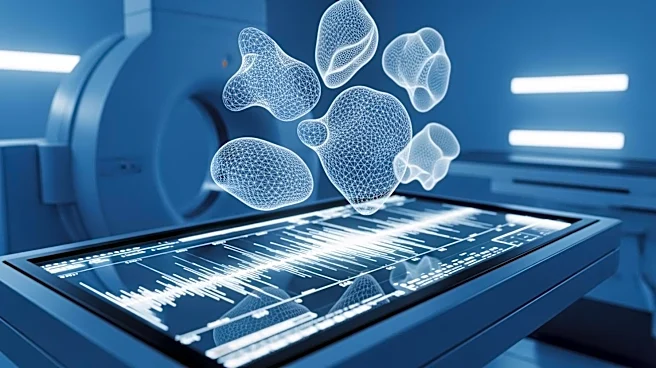
GE HealthCare has received 510(k) clearance from the FDA for its True Definition DL, a deep learning image reconstruction tool for computed tomography (CT). This technology is designed to significantly enhance spatial resolution and clarity in high-contrast
regions, making it particularly effective for lung, musculoskeletal, and inner ear imaging. The tool allows clinicians to generate ultra-high-resolution images in under a second, addressing the increasing demand for faster and more precise diagnostic imaging. This development comes as the global cancer burden is expected to rise by over 75% by 2050, and cardiovascular disease by nearly 90%, placing additional pressure on radiology departments.
Why It's Important?
The FDA clearance of True Definition DL represents a significant advancement in medical imaging technology, potentially transforming diagnostic practices in hospitals. By improving image quality and reducing scan times, this tool can enhance diagnostic accuracy and patient care, particularly in detecting small anomalies such as pulmonary nodules. This is crucial as radiology departments face growing demands due to an aging population and increasing disease prevalence. The technology's ability to provide high-resolution images without increasing radiation exposure is a critical benefit, addressing safety concerns associated with traditional CT scans.
What's Next?
With the FDA clearance, GE HealthCare is poised to implement True Definition DL in clinical settings, potentially setting a new standard for CT imaging. Hospitals and radiology departments may begin integrating this technology to improve diagnostic capabilities and patient outcomes. The adoption of such advanced imaging tools could lead to earlier detection of diseases, more accurate diagnoses, and more effective treatment planning. As the technology becomes more widely used, it may also drive further innovations in medical imaging and AI applications in healthcare.
Beyond the Headlines
The introduction of True Definition DL highlights the growing role of artificial intelligence in healthcare, particularly in enhancing diagnostic tools. This development may prompt discussions on the ethical use of AI in medicine, including data privacy and the potential for AI to replace human expertise. Additionally, the technology's ability to reduce radiation exposure aligns with broader healthcare goals of minimizing patient risk while maximizing diagnostic efficacy. As AI continues to evolve, its integration into medical practices could lead to significant shifts in how healthcare is delivered and experienced.