



What's Happening?
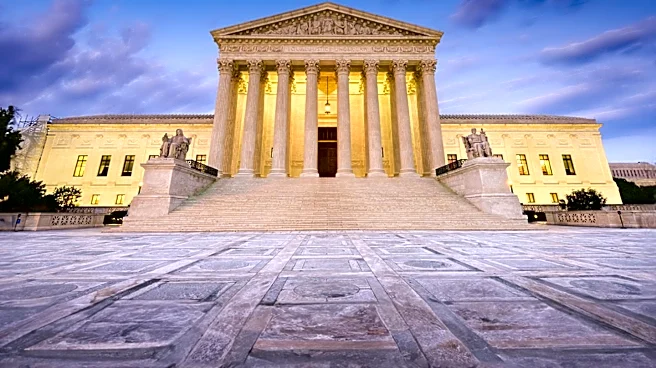
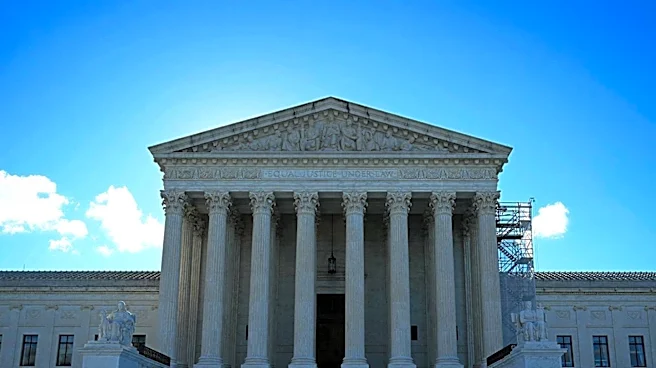
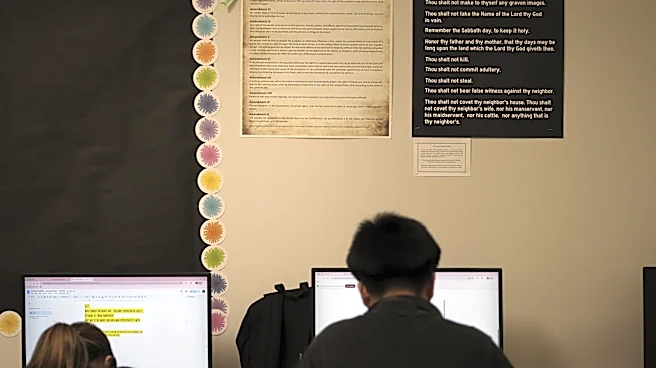
Civil liberties groups, representing several Texas families, have submitted a legal filing to the Supreme Court, formally requesting the overturning of a lower court's decision that permits the state to mandate the display of the Ten Commandments in every
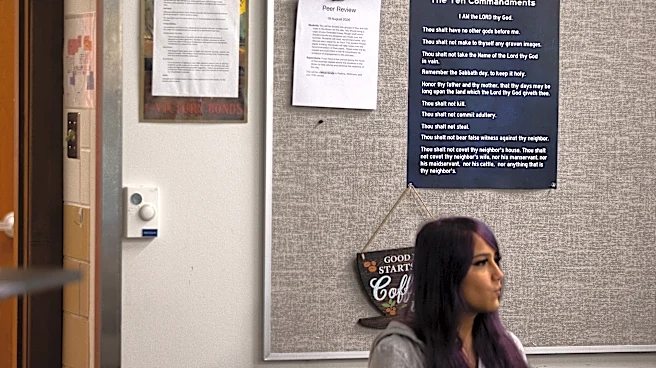
public school classroom. Last year, Texas Republican lawmakers passed Senate Bill 10, which requires a poster-sized display of the religious doctrine. This law was challenged by families from various religious and nonreligious backgrounds, arguing it violates the First Amendment's religious freedom principles. While a federal district judge initially found the law unconstitutional, the Fifth Circuit Court of Appeals narrowly overturned that ruling in an en banc decision in April, asserting that Texas lawmakers could require such displays.
Why It's Important?
This case is highly significant as it directly challenges the separation of church and state in public education, a foundational principle of the U.S. Constitution. The Supreme Court previously ruled in 1980 that state-mandated displays of the Ten Commandments in classrooms were unlawful, stating their purpose was to induce schoolchildren to venerate and obey the Commandments, which is not a permissible state objective under the Establishment Clause. The Fifth Circuit's ruling, if allowed to stand, could set a precedent that undermines decades of Supreme Court jurisprudence on religious freedom in schools. It could lead to similar laws in other states, potentially creating an environment where students from diverse religious or nonreligious backgrounds feel marginalized or pressured to conform to a specific religious viewpoint, thereby impacting their educational experience and constitutional rights.
What's Next?
The Supreme Court justices will decide within the next few months whether to accept the writ of certiorari, which requires the agreement of four justices. If the Court accepts the case, it will hear arguments and issue a ruling that could either uphold the Fifth Circuit's decision, thereby allowing the Texas law to stand, or overturn it, reaffirming the unconstitutionality of mandated religious displays in public schools. If the Court denies the writ, the Fifth Circuit's ruling will remain in effect, allowing Texas to proceed with its law. Regardless of the outcome, the case is expected to intensify the national debate over religious freedom, public education, and the interpretation of the First Amendment's Establishment Clause, potentially influencing future legislative efforts and legal challenges across the country.
Beyond the Headlines
Beyond the immediate legal implications, this case delves into the complex cultural and ethical dimensions of religious expression in public institutions. The debate over displaying the Ten Commandments in classrooms reflects a broader societal tension between religious freedom and the principle of religious neutrality in government. For many, the Ten Commandments represent a moral foundation, while for others, their mandated display in public schools constitutes an endorsement of a particular religion, potentially alienating students from different faiths or no faith. This legal challenge also highlights the ongoing struggle to define the boundaries of religious influence in public life and the role of the judiciary in safeguarding constitutional rights. The outcome could have long-lasting effects on how religious instruction and symbols are perceived and regulated within the U.S. public education system, shaping the experiences of generations of students.