


What's Happening?
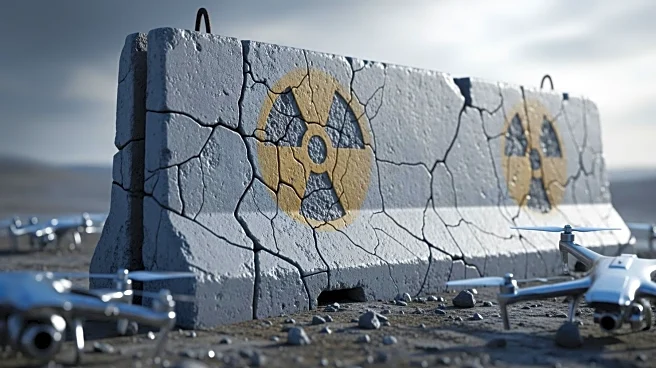
The protective shield at the Chernobyl nuclear power plant, known as the New Safe Confinement (NSC), has been severely damaged following a drone strike, according to the International Atomic Energy Agency (IAEA). The incident occurred on February 14,
and Ukraine has accused Russia of carrying out the attack, a claim that Russia denies. The NSC, a massive structure built in 2019 to contain radioactive material from the 1986 disaster, has lost its primary safety functions, including its confinement capability. Despite the damage, the IAEA's inspection revealed that the shield's load-bearing structures and monitoring systems remain intact. The NSC was designed to last 100 years and was financed by the Chernobyl Shelter Fund. The IAEA has recommended improvements to the structure and has pledged support for restoration efforts.
Why It's Important?
The damage to the NSC at Chernobyl raises significant concerns about nuclear safety and environmental security. The structure was a critical component in containing radioactive material from the 1986 disaster, which was the worst nuclear accident in history. The potential release of radioactive material poses a threat to the surrounding environment and the Ukrainian capital of Kyiv, located 80 miles away. The incident highlights the ongoing risks associated with nuclear sites in conflict zones, particularly in the context of the ongoing conflict between Russia and Ukraine. The IAEA's involvement underscores the international community's commitment to nuclear safety and the importance of maintaining robust containment measures at nuclear sites.
What's Next?
The IAEA has called for timely and comprehensive restoration of the NSC to prevent further degradation and ensure long-term nuclear safety. The European Bank for Reconstruction and Development is expected to fund the necessary renovations to restore the structure's confinement function. The IAEA will continue to support efforts to fully restore nuclear safety and security at the Chernobyl site. The situation may prompt further international scrutiny and diplomatic discussions regarding the security of nuclear facilities in conflict zones.