







What's Happening?
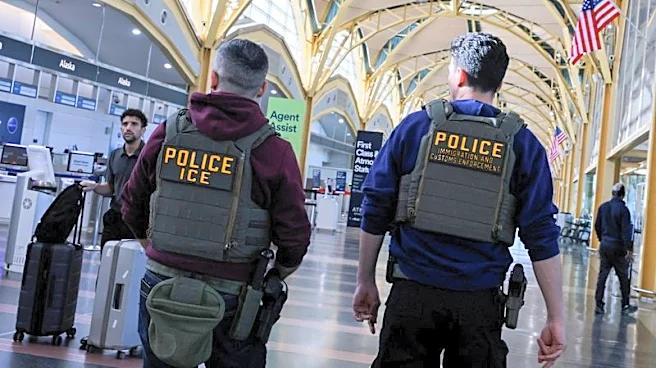
U.S. Immigration and Customs Enforcement (ICE) has come under scrutiny following an investigation revealing that the agency hired new officers with questionable backgrounds during a rapid expansion. This hiring spree, which aimed to double ICE's workforce
by adding 12,000 new officers and special agents, was fueled by a $75 billion congressional allocation to support President Trump's mass deportation campaign. The investigation found that some new hires had histories of bankruptcies, legal issues, and previous employment terminations. Despite ICE's claims of rigorous vetting, the rapid recruitment process has raised concerns about the qualifications and integrity of the new officers. The agency's acting director, Todd Lyons, defended the hiring campaign, emphasizing the need for a well-trained workforce to execute the administration's agenda. However, the investigation highlighted potential risks associated with insufficient vetting, including increased liability and abuse of power.
Why It's Important?
The hiring practices of ICE have significant implications for U.S. immigration enforcement and public trust in federal agencies. The rapid expansion and questionable vetting processes could lead to increased incidents of misconduct and abuse of power, undermining the agency's mission and credibility. This situation also raises concerns about the effectiveness of oversight and accountability mechanisms within ICE. The potential for hiring individuals with problematic backgrounds poses risks not only to the agency's operations but also to the communities they serve. Ensuring that law enforcement personnel are thoroughly vetted is crucial for maintaining public safety and trust. The findings of this investigation may prompt calls for reforms in ICE's hiring practices and greater transparency in its operations.
What's Next?
In response to the investigation, ICE may face pressure from lawmakers and advocacy groups to review and improve its hiring and vetting processes. There could be calls for increased oversight and accountability measures to ensure that new hires meet the necessary qualifications and standards. Additionally, the agency might need to address any incidents of misconduct involving new officers and take corrective actions to prevent future occurrences. The findings could also influence broader discussions on immigration policy and enforcement practices in the U.S., potentially leading to legislative or administrative changes aimed at enhancing the integrity and effectiveness of federal immigration agencies.