



What's Happening?
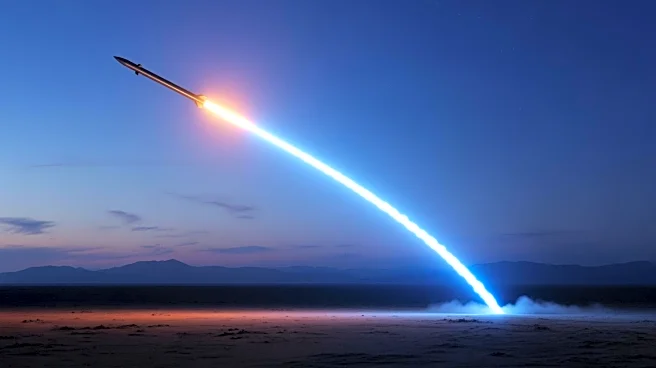
Yemen's pro-Iran Houthi movement has launched a missile at Israel, marking the first such attack since a cease-fire with Hamas in Gaza was declared in October 2025. The attack targeted sensitive military sites in Israel's south, and no casualties were
reported. The Houthis stated the attack was a response to continued targeting of infrastructure in Iran, Lebanon, Iraq, and Palestinian territories. The group has previously launched missiles and drones at Israel and attacked cargo ships in the Red Sea during the Israel-Gaza war.
Why It's Important?
The missile launch by the Houthis adds a new dimension to the ongoing conflict in the Middle East, potentially disrupting vital shipping lanes in the Red Sea. The Bab al-Mandab Strait, through which a significant portion of global trade passes, could be affected, leading to economic repercussions. The attack also reflects the broader geopolitical tensions involving Iran and its allies, including Hezbollah and Iraqi militias, which have already joined the conflict. The situation could lead to increased military and economic instability in the region.
What's Next?
The Houthis have indicated they may close the Bab al-Mandab Strait, further disrupting global trade. Iran has threatened to interfere with traffic in the strait, likely through the Houthis due to their proximity. The situation may lead to heightened military actions and economic disruptions, with major stakeholders like the U.S., Israel, and Iran closely monitoring developments.
Beyond the Headlines
The conflict highlights the complex geopolitical dynamics in the Middle East, where proxy wars and regional alliances play a significant role. The Houthis' actions reflect broader tensions between Iran and its adversaries, including the U.S. and Israel. The potential closure of strategic waterways like the Bab al-Mandab Strait could have long-term impacts on global trade and energy markets, emphasizing the interconnectedness of military and economic interests in the region.