
What's Happening?
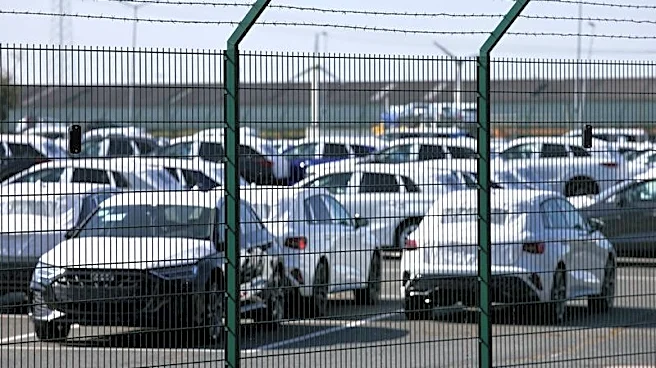
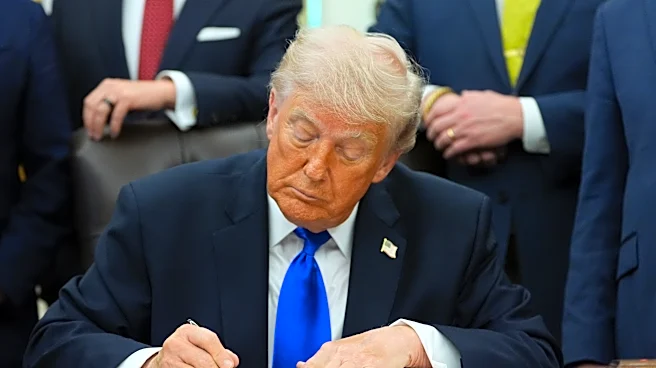
President Donald Trump has announced an increase in tariffs on cars and lorries imported from the European Union, raising them from 15% to 25%. This decision follows accusations that the EU has not complied
with a trade agreement made last summer. The tariffs will not apply to vehicles manufactured in the U.S. by EU companies. The move has been met with criticism from EU officials, who argue that it undermines the partnership between the U.S. and the EU. The European Commission has stated its commitment to the original trade deal and is considering its options to protect EU interests.
Why It's Important?
The tariff increase could have significant economic implications, affecting the automotive industry and trade relations between the U.S. and the EU. Higher tariffs may lead to increased costs for consumers and reduced competitiveness for EU automakers in the U.S. market. The decision also highlights the fragility of international trade agreements and the potential for unilateral actions to disrupt established economic partnerships. The situation underscores the importance of diplomatic engagement and negotiation in resolving trade disputes.
What's Next?
The EU is likely to engage in diplomatic efforts to address the tariff increase and seek a resolution that aligns with the original trade agreement. There may be discussions at the highest levels of government to prevent further escalation and to protect economic interests on both sides. The outcome of these negotiations will be crucial in determining the future of U.S.-EU trade relations and the stability of the global automotive market.