
What's Happening?
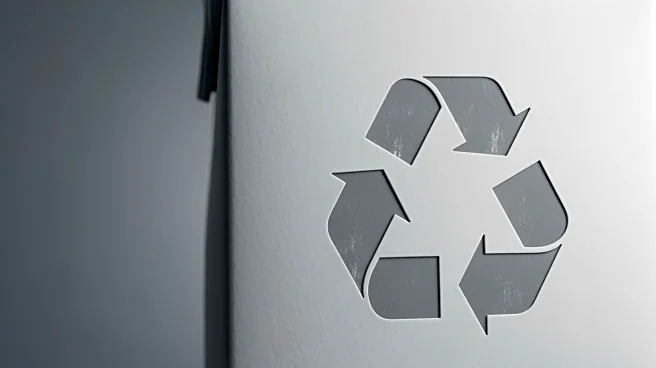
Waste Management, a major waste company, has announced it will cease sorting milk and juice cartons for recycling at its Sacramento facility. This decision could lead to the removal of the recycling symbol
from these cartons across California. The company cited concerns from buyers and overseas regulators about potential contamination of valuable materials, such as paper, by the cartons. This move affects the state's compliance with Senate Bill 343, which mandates that products must be recyclable to carry the recycling symbol. The National Carton Council has been lobbying to maintain the symbol, arguing that there is a market for recycled cartons, but Waste Management's decision has lowered the recycling rate below the required threshold.
Why It's Important?
The removal of the recycling symbol from milk and juice cartons in California could have significant implications for manufacturers and consumers. For manufacturers, losing the symbol may affect their ability to sell these products in the state, as California's strict recycling laws require all single-use packaging to be recyclable or compostable by 2032. For consumers, the absence of the symbol may reduce confidence in the recyclability of these products, potentially leading to increased landfill waste. This development also highlights the challenges in the recycling industry, particularly in finding sustainable markets for complex materials like cartons, which are composed of paper, plastic, and sometimes aluminum.
What's Next?
The decision by Waste Management may prompt further discussions and negotiations between waste management companies, manufacturers, and state regulators to find a viable solution for recycling cartons. The National Carton Council and other stakeholders may continue to lobby for the development of local recycling markets to meet state requirements. Additionally, there may be increased scrutiny on the export of waste materials to countries like Malaysia and Vietnam, which have previously banned certain imports due to contamination concerns. The outcome of these discussions could influence future recycling policies and practices in California and beyond.
Beyond the Headlines
This situation underscores the complexities of the recycling industry, where the recyclability of a product is not just about the material itself but also about the entire system of collection, sorting, and processing. The controversy also raises questions about the effectiveness of current recycling laws and the role of manufacturers in ensuring their products are truly recyclable. Furthermore, it highlights the global nature of waste management, where decisions made in one country can have ripple effects across international markets.