
What's Happening?
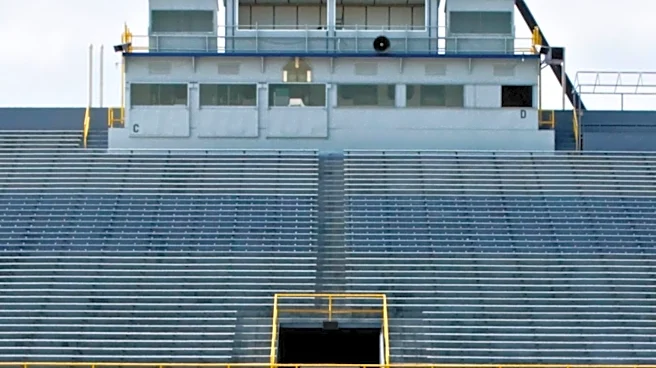
The San Juan Unified School District board has approved an $8 million project to upgrade the stadium at Rio Americano High School. The decision, made with a 6-1 vote, moves forward plans to install permanent
stadium lights, a new sound system, and bleachers with over 2,500 seats. This approval comes despite significant opposition from environmental advocates and local residents who are concerned about the potential impact on the adjacent American River Parkway, a protected natural area. The school, established in 1963, has never had permanent lighting for its athletic fields, forcing teams to schedule games during daylight hours or use other schools for nighttime home games. Rio Americano Principal Cliff Kelly stated that the improvements would benefit students and the community by allowing home games to be played on campus and reducing missed instructional time for athletes who currently leave early for away games.
Why It's Important?
This decision highlights a common conflict between community development and environmental preservation in the U.S. The approval of the stadium upgrades, particularly the installation of 80-foot-tall lights, raises concerns about light and noise pollution affecting wildlife in the American River Parkway. Environmental groups, such as the Waterbird Habitat Project and the Rio Americano Community Alliance, argue that the project could disrupt animal feeding, migration, and breeding patterns, leading to permanent habitat loss. Sacramento County Parks officials had also requested a woodland buffer zone and a relocation of the stadium further from the river. While district officials claim mitigation efforts, including specialized lights to limit light leakage, the project underscores the ongoing challenge of balancing educational and recreational needs with ecological responsibilities, potentially setting a precedent for similar developments near protected natural areas.
What's Next?
Construction on the Rio Americano High School stadium upgrades is scheduled to commence this summer, with the district aiming to complete the project by the start of the next school year. Environmental groups and local residents are likely to continue monitoring the project's implementation and its actual impact on the American River Parkway. While the school district has stated that mitigation efforts are in place, including advanced lighting technology designed to minimize light spill, the effectiveness of these measures will be closely scrutinized. The outcome of this project could influence future decisions regarding development near sensitive ecological areas within the San Juan Unified School District and potentially other districts facing similar challenges. Further community engagement and oversight are anticipated as the project progresses.
Beyond the Headlines
The debate surrounding the Rio Americano High School stadium project extends beyond immediate environmental concerns, touching upon broader ethical and educational implications. Opponents question whether approving such a project, despite environmental risks, sets the right example for students regarding environmental stewardship. The conflict also highlights the tension between providing modern facilities for student-athletes and preserving local ecosystems. This situation could prompt a re-evaluation of how school districts assess and mitigate environmental impacts for campus development projects, potentially leading to more stringent environmental review processes or innovative solutions that better integrate ecological considerations. The long-term success or failure of the stated mitigation efforts will be crucial in shaping public perception and future policy regarding development adjacent to protected natural habitats.