






What's Happening?
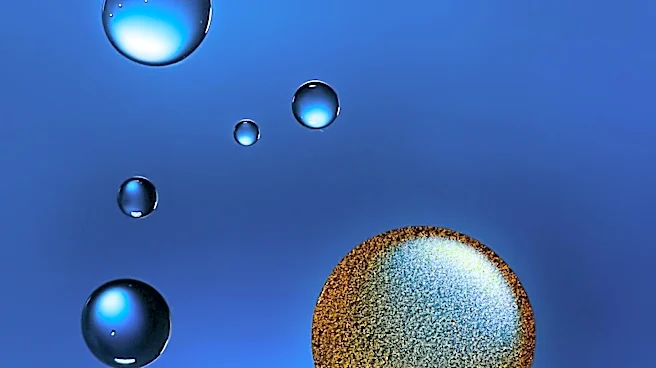
Recent developments in ultrasound technology have introduced lipid-shelled nanobubbles as a promising contrast agent for medical imaging. These nanobubbles are designed to improve the sensitivity and specificity of ultrasound imaging, particularly in detecting
diseases involving pathological vasculature. Unlike traditional microbubbles, which are larger, nanobubbles offer a smaller size that can be more broadly applicable across various medical fields. They have been utilized in preclinical applications, including oncology and endocrinology, to enhance both diagnostic and therapeutic outcomes. The lipid shell composition of these nanobubbles allows for better interaction with ultrasound waves, potentially leading to more precise imaging results.
Why It's Important?
The introduction of lipid-shelled nanobubbles in ultrasound imaging represents a significant advancement in medical diagnostics. By improving the contrast resolution of ultrasound images, these nanobubbles can lead to earlier and more accurate detection of diseases, which is crucial for effective treatment planning. This technology could revolutionize how certain conditions are diagnosed and monitored, particularly those involving complex vascular structures. The enhanced imaging capabilities may also facilitate more targeted therapeutic interventions, reducing the need for invasive procedures and improving patient outcomes. As healthcare systems continue to seek more efficient and cost-effective diagnostic tools, the adoption of nanobubble technology could have widespread implications for medical practice.
What's Next?
As research and development in this area continue, the next steps involve clinical trials to validate the efficacy and safety of lipid-shelled nanobubbles in human patients. Regulatory approvals will be necessary before these agents can be widely used in clinical settings. Additionally, further studies may explore the potential of these nanobubbles in delivering targeted therapies, opening new avenues for treatment in oncology and other fields. The medical community will be closely monitoring these developments, as successful integration of this technology could lead to significant changes in diagnostic and therapeutic protocols.
Beyond the Headlines
Beyond immediate clinical applications, the use of lipid-shelled nanobubbles in ultrasound imaging could have broader implications for the healthcare industry. This technology may drive innovation in medical imaging equipment, prompting manufacturers to develop new ultrasound machines optimized for nanobubble use. Furthermore, the ability to enhance imaging precision could lead to more personalized medicine approaches, where treatments are tailored based on detailed imaging data. Ethical considerations regarding the accessibility and cost of such advanced technologies will also need to be addressed to ensure equitable healthcare delivery.