
What's Happening?
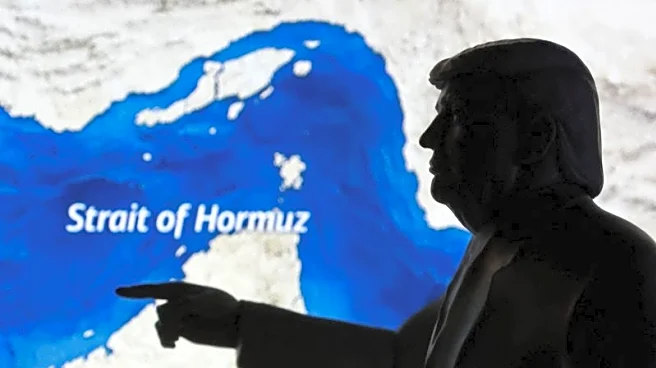
President Trump has issued a stern warning to Iranian officials, urging them to engage seriously in peace negotiations to end the ongoing four-week-old conflict. In a post on Truth Social, President Trump described the Iranian negotiators as 'very different
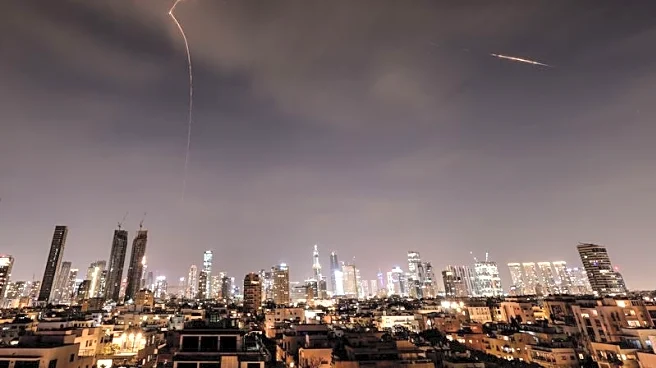
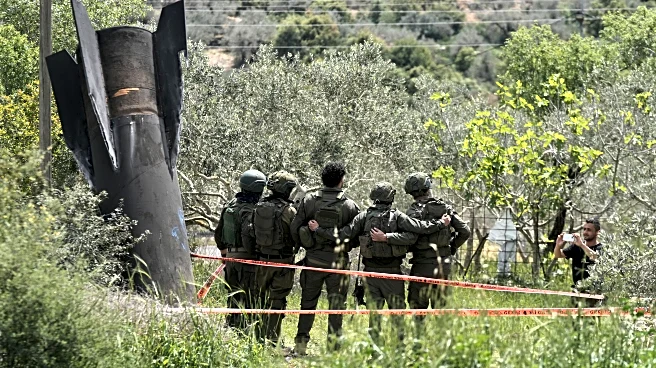
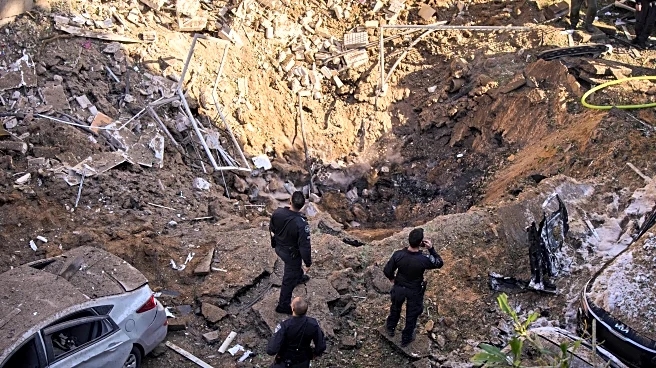
and strange,' accusing them of publicly downplaying the urgency of the situation despite their military setbacks. He emphasized that Iran should be eager to negotiate due to their current military disadvantage, warning that failure to do so could lead to irreversible consequences. This statement comes amid heightened tensions and military actions, including recent airstrikes in Tehran.
Why It's Important?
The call for serious negotiations by President Trump highlights the critical nature of the conflict and its potential to escalate further if not addressed diplomatically. The ongoing war has significant implications for regional stability in the Middle East and could impact global oil markets, given Iran's role as a major oil producer. The U.S. administration's approach to the conflict may influence international relations and alliances, particularly with countries involved in or affected by the Middle East's geopolitical dynamics. The outcome of these negotiations could either stabilize or further destabilize the region, affecting global economic and security interests.
What's Next?
The next steps involve monitoring Iran's response to President Trump's warning and any subsequent diplomatic engagements. The international community, including allies and adversaries, will likely watch closely to see if Iran alters its stance or if the U.S. administration takes further action. Potential reactions from other global powers could shape the diplomatic landscape, influencing future negotiations and conflict resolution efforts. The situation remains fluid, with the possibility of further military or diplomatic developments.