
What's Happening?
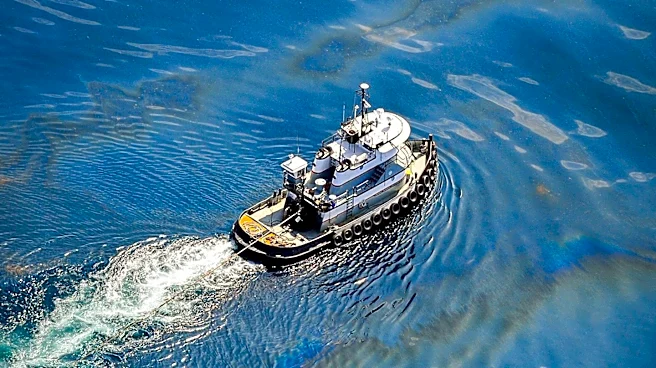
Marine investigators in New Zealand have issued a warning about the dangers of toxic gas exposure on fishing vessels following a near-fatal incident on the Australian-registered vessel, Antarctic Discovery.
The Transport Accident Investigation Commission (TAIC) released a report detailing how a routine maintenance task turned into a life-threatening situation when four workers were exposed to hydrogen sulfide (H2S), a toxic gas produced by decaying fish. The incident occurred in February last year when the vessel was undergoing maintenance in New Zealand. The gas exposure happened after a temporary fix to a blocked discharge valve led to the accidental activation of an offal pump, releasing the gas. All affected workers were hospitalized but recovered. The Antarctic Discovery, a longline fishing vessel, was returning from a Southern Ocean voyage when the incident occurred.
Why It's Important?
This incident underscores the ongoing risks faced by fishing vessel crews from toxic gases like hydrogen sulfide, which can be lethal. The TAIC report highlights the need for stringent safety measures and proper maintenance protocols to prevent such occurrences. The fishing industry, particularly those operating in remote and harsh environments like the Southern Ocean, must prioritize crew safety to avoid similar incidents. The report's recommendations for Australian Longline and the Lyttelton Port Company aim to enhance safety standards and prevent future accidents. This incident also serves as a reminder of the broader safety challenges in the maritime industry, where confined spaces and hazardous materials pose significant risks.
What's Next?
Following the report, the TAIC has recommended that Australian Longline obtain appropriate approvals for modifications to safety-critical systems before conducting any work. Additionally, the Lyttelton Port Company has been directed to implement measures to improve dry dock safety. These steps are intended to prevent future incidents and ensure the safety of crew members. The maritime industry may see increased regulatory scrutiny and the implementation of more rigorous safety protocols as a result of this incident. Stakeholders, including vessel operators and port authorities, will need to collaborate to enhance safety measures and protect workers from similar hazards.