

What's Happening?
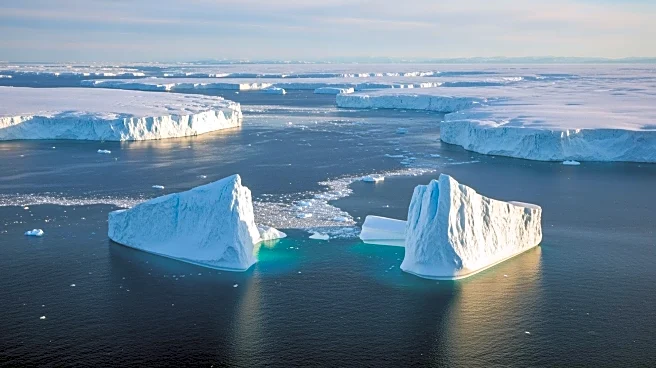
The U.S. and Denmark are engaged in discussions over the future of Greenland, a semi-autonomous Danish territory, amid increasing geopolitical tensions in the Arctic. President Trump has expressed interest in acquiring Greenland, citing its strategic
importance and resource wealth. However, Denmark and Greenland have rejected the idea, emphasizing that the island is not for sale. The discussions, which included Danish and Greenlandic officials, ended without a resolution, highlighting fundamental disagreements. Meanwhile, European NATO members are increasing their military presence in Greenland to strengthen security in the region, a move seen as a response to perceived threats from Russia and China.
Why It's Important?
The situation underscores the strategic significance of Greenland in global geopolitics, particularly in the context of Arctic security. The U.S.'s interest in Greenland reflects broader concerns about Russian and Chinese influence in the Arctic. The deployment of European troops to Greenland signals a commitment to defending NATO territories and maintaining stability in the region. This development could impact U.S.-European relations, as well as the dynamics within NATO, especially if the U.S. pursues unilateral actions regarding Greenland. The outcome of these discussions could influence future Arctic policies and international relations.
What's Next?
Further discussions between the U.S., Denmark, and Greenland are expected, with the possibility of forming a high-level working group to address ongoing concerns. European nations are likely to continue their military exercises in Greenland, reinforcing their presence. The U.S. may face diplomatic challenges if it continues to push for control over Greenland, potentially straining relations with its European allies. The situation will require careful negotiation to avoid escalating tensions and to ensure the security and sovereignty of Greenland.