









What's Happening?
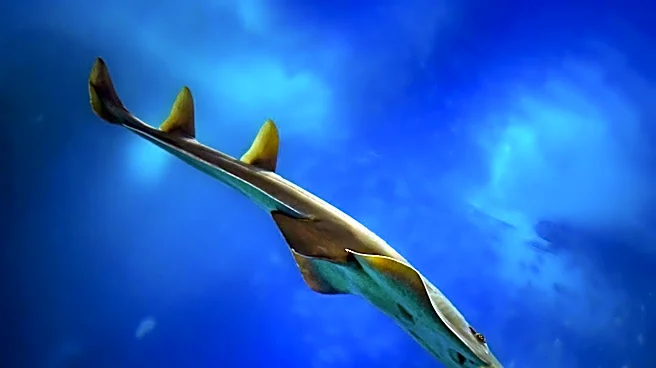
In Ghana, marine biologist Dr. Issah Seidu is leading efforts to save guitarfish, a critically endangered species threatened by the demand for their fins. Guitarfish, known as 'living fossils,' are increasingly targeted by fishers due to their valuable
fins, which are sold in Asian markets for luxury soup. Seidu's work involves transforming local fishers into protectors of these species by training them in safe-release techniques and data collection. His initiative, AquaLife Conservancy, aims to create Ghana's first locally managed marine area to help guitarfish recover. Seidu's efforts have earned him a Whitley Award for grassroots conservation.
Why It's Important?
The conservation of guitarfish is crucial for maintaining the balance of marine ecosystems, as they play a vital role in the food web. Overfishing and illegal trade practices threaten their survival, impacting biodiversity and food security in coastal communities. Seidu's approach not only aims to protect guitarfish but also provides alternative livelihoods for fishers, reducing their dependence on the ocean. This model of community involvement in conservation could serve as a blueprint for similar efforts globally, highlighting the importance of sustainable practices in preserving marine life.
What's Next?
Seidu plans to push for stricter regulations under the Convention on International Trade in Endangered Species (CITES) to further protect guitarfish. His goal is to elevate their protection status to Appendix I, which would prohibit exploitation entirely. Additionally, Seidu continues to train local fishers and students, expanding awareness and support for marine conservation. The success of his initiative could influence policy changes and inspire similar conservation models in other regions, fostering a collaborative approach to environmental protection.
Beyond the Headlines
Seidu's work underscores the ethical responsibility to balance conservation with the livelihoods of local communities. By involving fishers in the conservation process, he challenges the notion that environmental protection must come at the expense of economic stability. This approach not only aids in preserving endangered species but also empowers communities to become active participants in safeguarding their natural resources. The long-term impact of such initiatives could lead to a cultural shift towards sustainable fishing practices and greater environmental stewardship.