




What's Happening?
A new report from the Center for Infectious Disease Research and Policy’s (CIDRAP) Vaccine Integrity Project (VIP) at the University of Minnesota highlights that infants as young as 6 months can safely receive the measles, mumps, and rubella (MMR) vaccine.
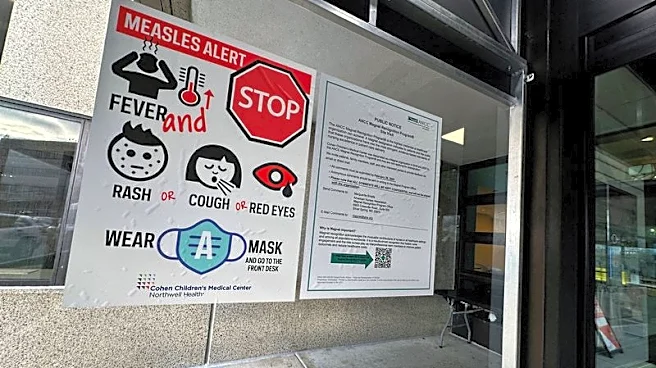
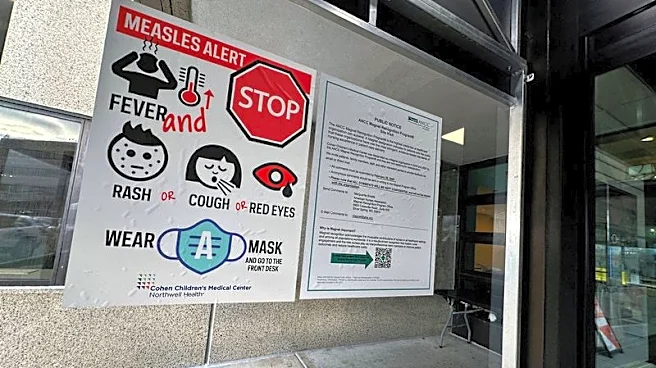
This comes as the U.S. faces a nationwide measles resurgence, with over 5,400 cases and 10 deaths across 45 states this year, leading the Pan American Health Organization to revoke the nation’s measles elimination status. While routine MMR vaccination typically begins at 12 to 15 months, federal health authorities have long recommended an early 'zero dose' for infants aged 6 to 11 months traveling internationally or to outbreak areas. The VIP assessment found that this early dose provides meaningful protection (58% effectiveness before 9 months, 83% from 9 to 11 months) without increased risk of adverse events compared to vaccination at older ages. However, infants receiving a zero dose still require the full two-dose series starting at 12 to 15 months due to potentially less durable immunity from early vaccination.
Why It's Important?
The resurgence of measles and the loss of the U.S.'s elimination status underscore a critical public health challenge. This report provides timely, evidence-based information for parents and healthcare providers, especially as holiday travel increases the risk of exposure for young infants. Measles is particularly dangerous for infants whose maternal antibodies are waning. The Centers for Disease Control and Prevention (CDC) has been notably silent on the current outbreak, creating a communication gap that this report aims to fill. Clear guidance on early vaccination is crucial for protecting vulnerable populations and preventing further spread of the highly contagious virus. Re-establishing high vaccination rates is essential to regain measles elimination status and protect community health, particularly for those who cannot be vaccinated, such as immunocompromised individuals and very young infants.
What's Next?
With the holiday travel season approaching, CIDRAP Director Michael T. Osterholm, PhD, MPH, emphasizes the increased risk of measles exposure for families with young infants. Parents are encouraged to consult their child's healthcare provider to determine if a 'zero dose' MMR vaccine is appropriate before traveling or if they reside in or visit areas with active outbreaks. Public health efforts will likely focus on improving communication regarding vaccine recommendations and addressing vaccine hesitancy to increase overall vaccination rates. The report implicitly calls for federal health agencies, particularly the CDC, to re-engage in clear and consistent public health messaging to inform the public about measles risks and prevention strategies. The long-term goal remains to achieve community immunity levels that prevent sustained measles transmission and allow the U.S. to regain its measles elimination status.
Beyond the Headlines
The current measles resurgence highlights broader issues within the U.S. public health infrastructure, particularly concerning communication and trust. The perceived silence from federal health agencies during a significant outbreak can erode public confidence and create an information vacuum, potentially filled by misinformation. This situation underscores the critical role of independent research organizations like CIDRAP in providing timely, evidence-based guidance. The loss of measles elimination status also reflects a decline in vaccination rates in some communities, pointing to underlying societal challenges such as vaccine hesitancy and the impact of misinformation campaigns. Addressing these deeper issues requires a multi-faceted approach involving public health education, community engagement, and robust, transparent communication from trusted health authorities to rebuild and maintain high vaccination coverage.