







What's Happening?
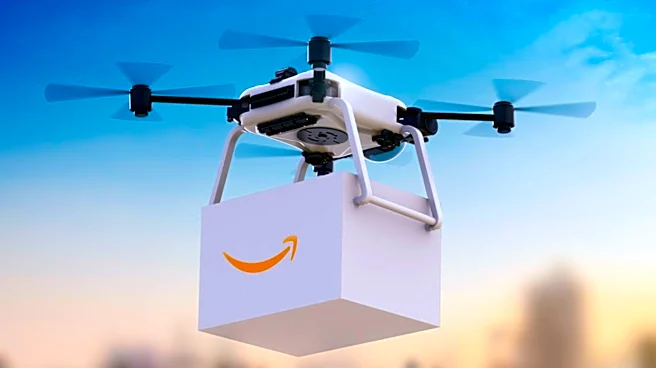
Amazon has officially withdrawn its application to establish a drone package delivery launch site in Westborough, Massachusetts. This decision comes after significant pushback from local residents, state and federal lawmakers, and community groups. Millbury
Senator Michael Moore, along with Representatives Hannah Kane of Shrewsbury and Kate Donaghue of Westborough, issued a joint statement confirming Amazon's withdrawal. The proposed plan involved delivering Prime Air packages weighing less than 5 pounds via unmanned aircraft within a 7.5-mile radius of Amazon's Westborough fulfillment center. Concerns raised by the community and officials included noise pollution, safety risks, privacy issues, environmental impact, and overall quality of life. Amazon's letter to the Westborough Planning Board formally requested to withdraw its site plan review application without prejudice.
Why It's Important?
This withdrawal is a significant victory for local advocacy and community engagement against large corporate expansion. It demonstrates the power of collective action by residents, supported by their elected officials, in influencing the decisions of major corporations like Amazon. The intense pushback highlights growing public concerns regarding the potential negative impacts of emerging technologies, such as drone delivery, on daily life, including noise, privacy, and safety. For Amazon, this setback in Westborough could influence its future strategies for expanding drone delivery services in other communities, potentially leading to more proactive engagement with local concerns or a re-evaluation of its deployment models. It also underscores the importance of local zoning and planning boards in regulating new technologies and protecting community interests.
What's Next?
Following Amazon's withdrawal, the immediate next step for Westborough will be the formal processing of the withdrawal request by the Westborough Planning Board. This decision may set a precedent for how other communities in Massachusetts and beyond approach similar proposals for drone delivery or other disruptive technologies. Local officials and community groups, such as Mass Blue Skies, who were instrumental in advocating against the plan, will likely continue to monitor future developments related to drone technology and its potential impact on residential areas. Amazon, while stating it values its relationship with Westborough and looks forward to continuing to work with town officials on next steps, may need to refine its community engagement strategies and address public concerns more comprehensively before attempting to implement similar drone delivery programs elsewhere.
Beyond the Headlines
The Westborough case illuminates a broader societal tension between technological innovation and community well-being. While drone delivery promises efficiency and convenience, this incident reveals that public acceptance is not guaranteed, especially when perceived quality-of-life issues are at stake. The concerns about noise, privacy, and safety reflect a deeper anxiety about the encroachment of commercial operations into residential spaces and the potential erosion of local control. This situation could prompt a wider debate on the regulatory frameworks needed for emerging technologies, balancing economic benefits with social and environmental considerations. It also highlights the evolving role of local governance in mediating these complex issues, potentially leading to more robust community-impact assessments for future technological deployments.