







What's Happening?
Georgia Tech is implementing advanced sustainability standards across its campus development, as detailed in its updated Yellow Book guidelines. Recent projects, including the Thomas A. Fanning Student-Athlete Performance Center, the Bud and Val Peterson
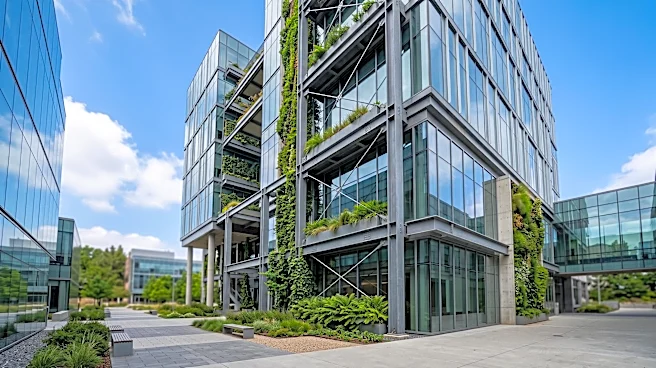
Residence Hall, Brittain Dining Hall, and George Tower | Scheller Tower, exemplify these efforts. The Thomas A. Fanning Student-Athlete Performance Center utilized 25 tons of salvaged structural steel from a demolished building, preventing 25,000 kilograms of CO2 emissions. The Bud and Val Peterson Residence Hall incorporates sustainable design strategies like optimized building orientation, high-performance envelopes, and extensive natural lighting to enhance energy efficiency. The Brittain Dining Hall renovation focused on extending the building's life with LED lighting, high-efficiency HVAC, and water-saving kitchen operations. George Tower | Scheller Tower, an all-electric facility, is projected to use 75% less energy and reduce its carbon footprint by over 20%, with 70% of its water needs met by captured and reclaimed rainwater. These initiatives underscore Georgia Tech's commitment to responsible resource stewardship and sustainable campus growth.
Why It's Important?
Georgia Tech's comprehensive approach to sustainable campus development sets a precedent for other educational institutions and large organizations. By integrating sustainability into every phase of planning, design, construction, and renovation, the university demonstrates how environmental responsibility can be a core component of institutional growth. The use of salvaged materials, advanced energy-efficient systems, and water conservation techniques not only reduces the environmental impact of new constructions and renovations but also yields significant long-term operational cost savings. This commitment contributes to broader climate goals by reducing carbon emissions and conserving natural resources. Furthermore, these projects serve as living laboratories, providing students and researchers with real-world examples of sustainable engineering and architecture, fostering innovation in green building practices, and preparing future leaders in environmental stewardship.
What's Next?
Georgia Tech plans to continue updating its Yellow Book to ensure its sustainability guidelines evolve with new technologies and priorities. The success of current projects will likely inform future campus developments, with an emphasis on replicating and scaling effective sustainable strategies. The institution will continue to evaluate energy performance, life-cycle costs, water conservation opportunities, and the environmental impact of building materials. Future initiatives may include further integration of renewable energy sources, advanced waste diversion programs, and smart building technologies to continuously optimize resource use. The ongoing commitment to sustainability will also involve engaging the broader campus community in these efforts, promoting a culture of environmental awareness and responsibility among students, faculty, and staff.
Beyond the Headlines
The deeper implications of Georgia Tech's sustainability drive extend beyond immediate environmental benefits. This institutional commitment reflects a growing societal demand for organizations to operate responsibly and ethically. By prioritizing sustainable development, Georgia Tech enhances its reputation as a forward-thinking institution, attracting students and faculty who value environmental stewardship. The integration of sustainable practices into the campus infrastructure also provides a unique educational advantage, allowing students to learn within an environment that embodies the principles of sustainability. This approach can influence future generations of professionals to adopt similar practices in their respective fields, fostering a broader cultural shift towards sustainability in the built environment and beyond. The university's efforts highlight the potential for large-scale institutions to lead by example in addressing global environmental challenges.