



What's Happening?
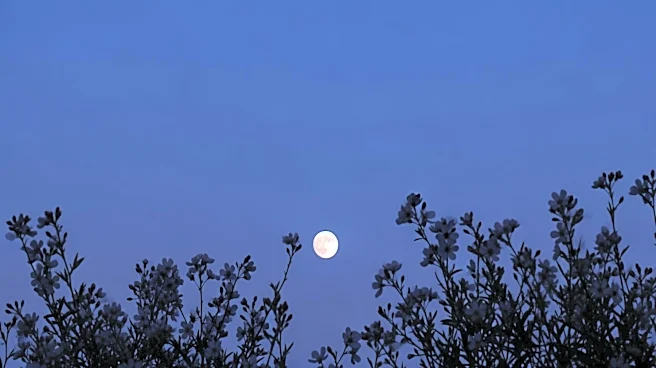
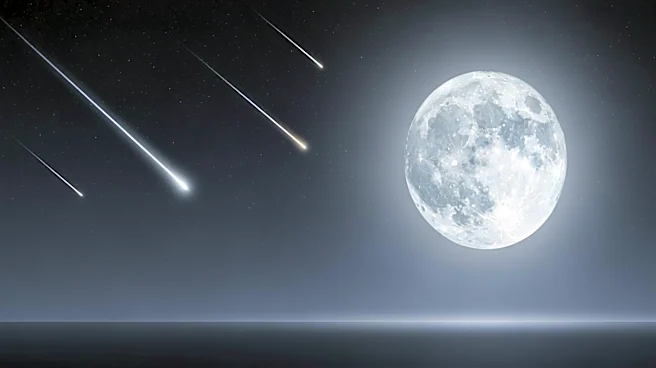
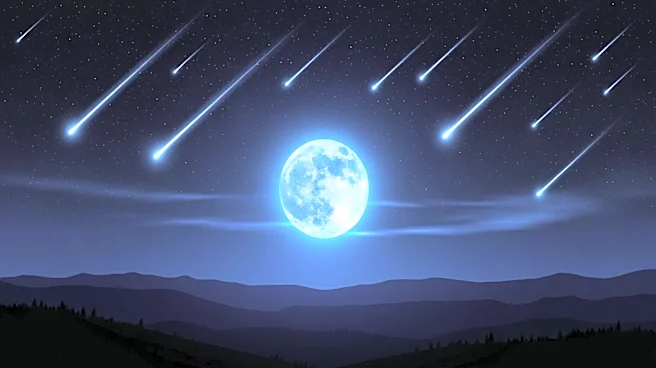
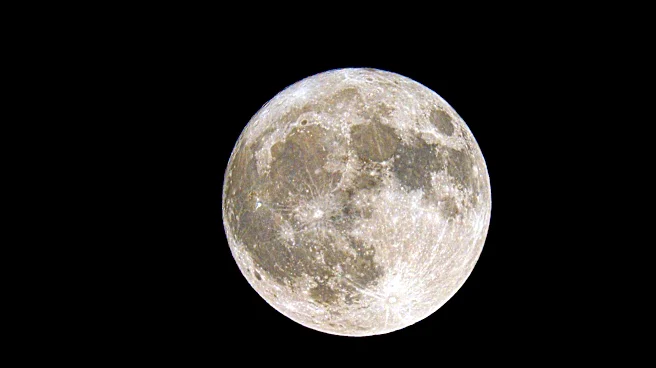
The Eta Aquarid meteor shower, composed of debris from Halley's Comet, is set to peak on Tuesday night into Wednesday morning. However, a bright moon is expected to reduce visibility, particularly in the Northern Hemisphere, where fewer than 10 meteors
per hour may be visible. The Southern Hemisphere typically sees up to 50 meteors per hour during the peak. The shower occurs as Earth passes through the debris trail left by Halley's Comet, which orbits the sun every 76 years.
Why It's Important?
Meteor showers like the Eta Aquarids offer a unique opportunity for skywatchers to observe celestial events and connect with the broader universe. Despite the reduced visibility this year, the event highlights the ongoing interest in astronomical phenomena and the public's engagement with science. It also underscores the challenges posed by natural light pollution, such as the moon, in observing such events. The shower serves as a reminder of the dynamic nature of our solar system and the historical significance of comets like Halley's.