




What's Happening?
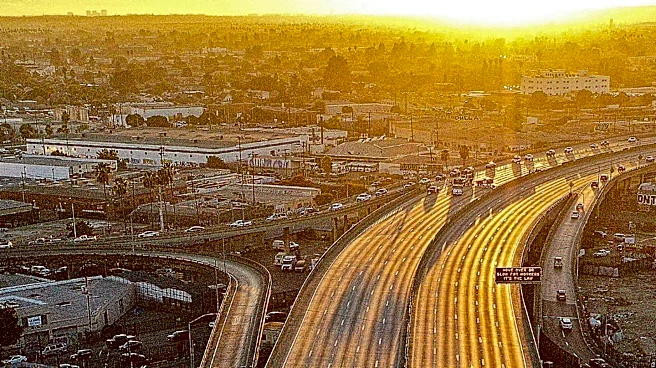
Ongoing construction along Interstate 35 in San Antonio is causing significant traffic delays, turning routine commutes into lengthy ordeals and complicating critical situations like medical emergencies. Drivers are expressing widespread frustration,
with social media videos highlighting the extended travel times. For instance, one commuter reported a typical 30-minute drive extending to over 90 minutes. The traffic issues also impacted Heather Towner's family when she suffered a seizure at home. An ambulance transporting her to a hospital for a brain hemorrhage, a trip that normally takes about 25 minutes, took over an hour due to the I-35 lane closures. The Texas Department of Transportation (TxDOT) stated that overnight lane closures are necessary for critical construction activities, including bridge construction and concrete placement, but assured that mainlanes are open during the day. TxDOT anticipates some relief for drivers in early 2027.
Why It's Important?
The severe traffic congestion on I-35 has a multifaceted impact on the San Antonio community. Economically, prolonged commutes can lead to decreased productivity for businesses and increased fuel costs for individuals and commercial transport. For residents, the daily frustration affects quality of life, increasing stress and reducing personal time. Critically, the delays pose a significant public safety risk, as demonstrated by the extended ambulance travel time during a medical emergency. This highlights a potential vulnerability in the city's emergency response capabilities, where minutes can be life-saving. The situation underscores the challenge of managing essential infrastructure development while minimizing disruption to a growing urban population, affecting everything from daily routines to emergency services.
What's Next?
TxDOT has indicated that some relief for I-35 drivers is expected in early 2027, suggesting that the current level of disruption will continue for some time. In the interim, local officials and TxDOT may face increasing pressure to address the immediate impacts of the construction. This could involve exploring options for better traffic management during peak hours, improving communication about alternative routes, or coordinating more effectively with emergency services to ensure critical response times are not unduly compromised. Residents like Shanna Lucius, Heather Towner's mother, are advocating for better alternative routes for emergencies, which could prompt discussions on dedicated emergency lanes or more dynamic traffic control systems during critical incidents. The long-term goal remains the completion of the infrastructure project, which is intended to improve traffic flow in the future.
Beyond the Headlines
The I-35 construction saga in San Antonio illuminates a broader national challenge faced by rapidly growing urban centers: how to upgrade aging infrastructure to meet increasing demands without paralyzing daily life. This situation brings to the forefront the tension between long-term urban development goals and the immediate needs and well-being of the populace. It raises questions about urban planning strategies, the adequacy of public transportation alternatives, and the resilience of emergency services in the face of significant infrastructural overhauls. The public's frustration, amplified through social media, also reflects a growing demand for transparency and accountability from government agencies regarding project timelines, impacts, and mitigation strategies. Ultimately, this local issue serves as a microcosm for the complex balancing act required to foster urban growth while maintaining livability and safety for its citizens.