





What's Happening?
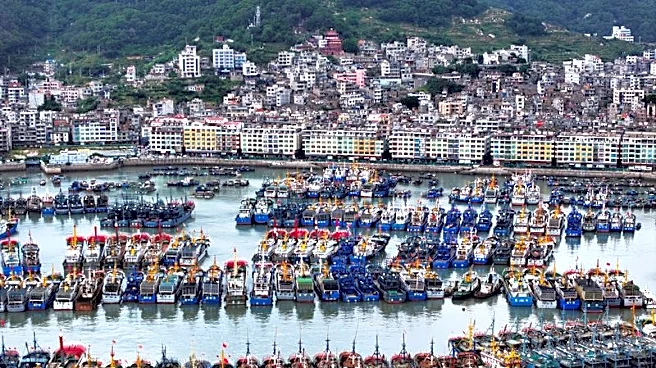
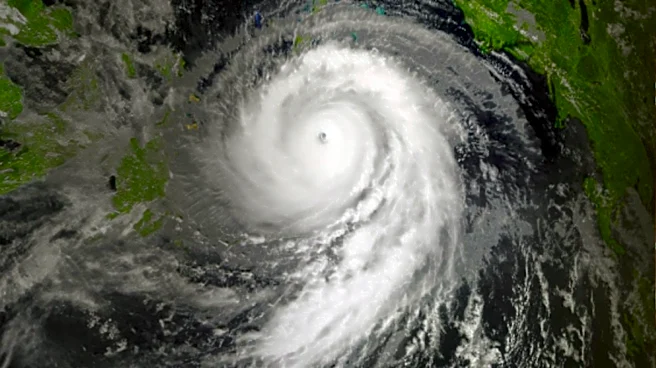
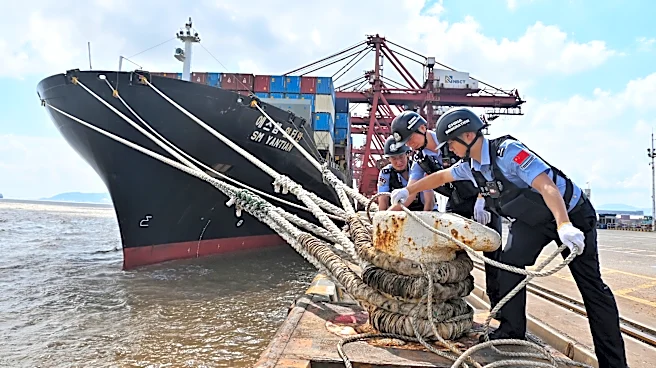
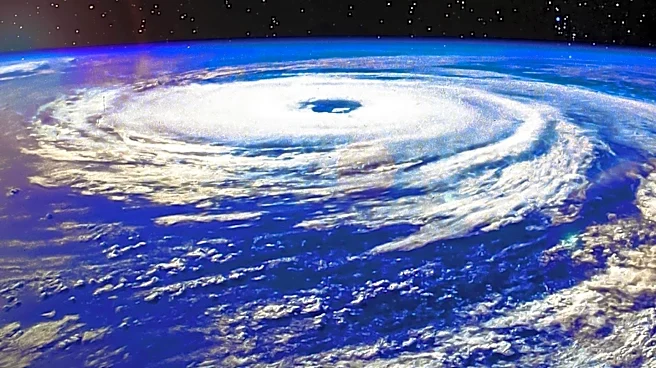
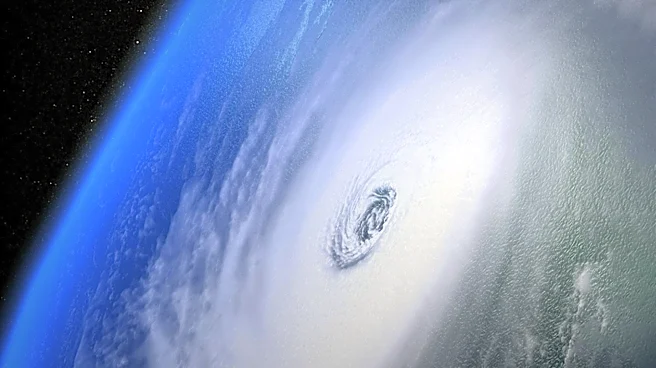
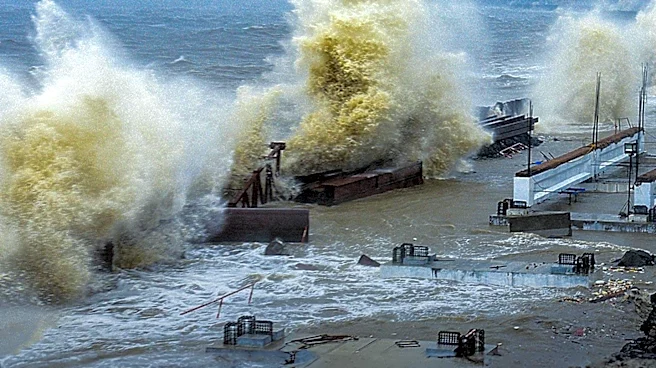
Typhoon Dolphin made landfall in China's eastern coastal region on August 9th, bringing strong winds and heavy rain. The storm prompted authorities to evacuate hundreds of thousands of people and suspend waterway traffic. Thousands of flights were canceled
as a precautionary measure. The typhoon first hit Yuhuan City in Zhejiang Province with winds exceeding 150 km/h and later made a second landfall in Yueqing City. The China National Meteorological Center issued a red storm alert, warning of heavy rainfall in Zhejiang, Fujian, and neighboring areas. The storm had previously caused damage in Japan and Taiwan, with injuries and power outages reported.
Why It's Important?
The impact of Typhoon Dolphin is significant due to the large-scale evacuations and disruptions in transportation, affecting both local populations and economic activities. The storm's intensity and the subsequent response highlight the vulnerability of coastal regions to extreme weather events. The cancellation of flights and suspension of maritime operations indicate the potential economic losses and logistical challenges faced by the affected areas. Additionally, the storm's impact on infrastructure and the environment could have long-term consequences for recovery and resilience planning.
What's Next?
As Typhoon Dolphin moves inland, it is expected to weaken, but prolonged heavy rainfall could continue to pose risks such as flooding and landslides. Authorities will likely focus on recovery efforts and assessing the damage. The response to the storm may prompt discussions on improving infrastructure resilience and emergency preparedness in the face of increasingly frequent and severe weather events.