



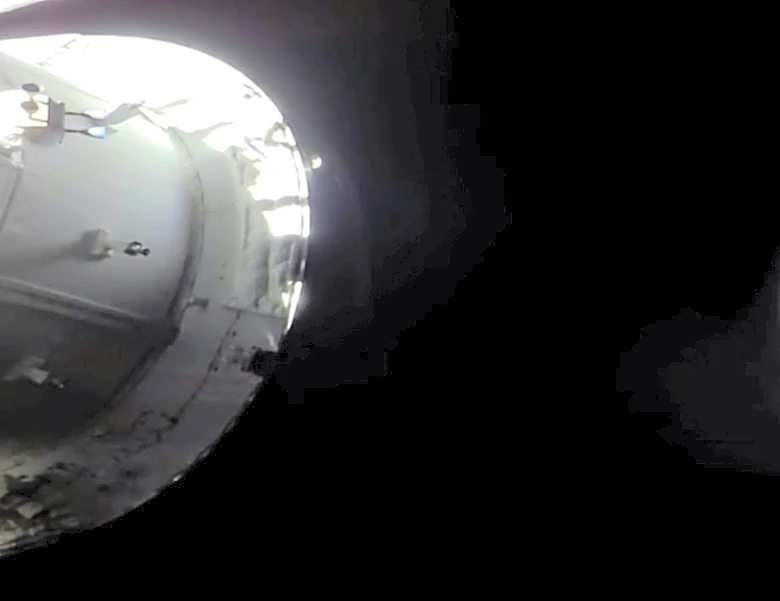




What's Happening?
The Artemis II mission, involving NASA astronauts Reid Wiseman, Victor Glover, Christina Koch, and Canadian Space Agency astronaut Jeremy Hansen, successfully completed a historic lunar flyby. This mission marks humanity's first return to the Moon since
Apollo 17 in 1972. During the mission, the crew set a new record for the farthest distance traveled from Earth by any human, surpassing Apollo 13's distance. The crew captured images of the lunar far side and observed various lunar features. They also experienced an 'Earthset' and 'Earthrise' as the spacecraft traveled behind and emerged from the Moon. The mission included a nearly hour-long solar eclipse, allowing the crew to analyze the solar corona and observe meteoroid impacts on the Moon's surface.
Why It's Important?
The Artemis II mission represents a significant milestone in human space exploration, demonstrating the capabilities of modern space technology and international collaboration. The mission's success paves the way for future lunar exploration and potential human settlement on the Moon. The data collected during the flyby will enhance scientific understanding of the Moon's composition and history, contributing to broader space exploration goals. The mission also highlights the importance of international partnerships in advancing space exploration, as seen in the collaboration between NASA and the Canadian Space Agency.
What's Next?
Following the successful lunar flyby, the Artemis II crew will continue their mission, with further data analysis and discussions with the lunar science team scheduled. The mission's findings will inform future Artemis missions, including potential manned lunar landings. NASA's ongoing live coverage and public engagement efforts aim to maintain interest and support for future space exploration initiatives.