








What's Happening?
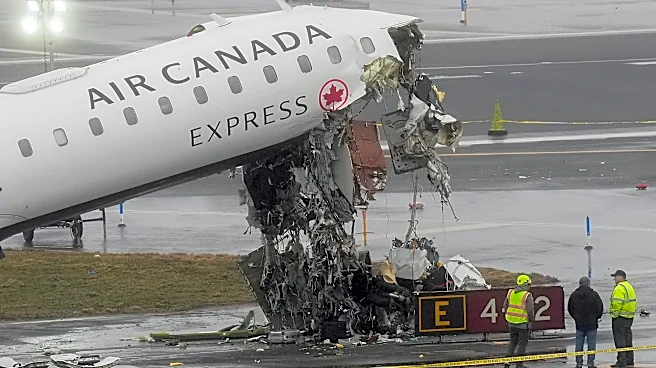
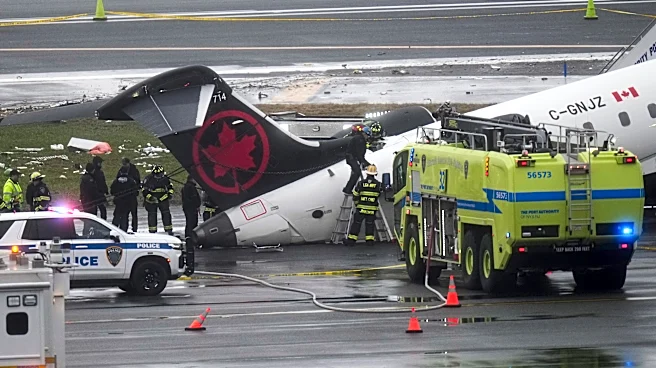
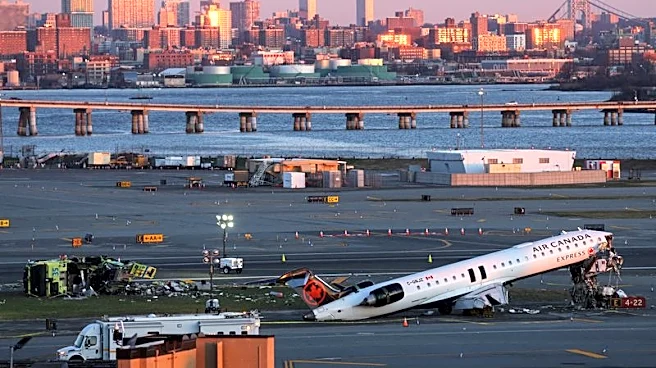
A preliminary report by the National Transportation Safety Board (NTSB) has revealed significant communication failures that contributed to a fatal collision at New York's LaGuardia Airport. On March 22, an Air Canada Express jet collided with a fire
truck on the runway, resulting in the deaths of both pilots and injuries to 39 others. The report indicates that a firefighter in the truck heard an air traffic controller's warning to 'stop, stop, stop' but did not realize it was directed at his vehicle. The truck, part of a convoy responding to an emergency involving a United Airlines jet, was cleared to cross the runway just seconds before the Air Canada plane landed. The NTSB noted that the truck lacked a transponder, which prevented the airport's surface monitoring system from accurately tracking its position and predicting the collision.
Why It's Important?
The incident underscores critical vulnerabilities in airport safety protocols, particularly concerning communication and monitoring systems. The lack of a transponder on the fire truck and the failure of the surface monitoring system to generate alerts highlight potential gaps in safety measures at major airports. This crash, the first deadly incident at LaGuardia in 34 years, raises concerns about the adequacy of current systems to prevent runway incursions and ensure the safety of both aircraft and ground vehicles. The findings could prompt a reevaluation of safety protocols and the implementation of more robust systems to prevent similar tragedies in the future.
What's Next?
The NTSB's preliminary report is the first step in a comprehensive investigation that could take up to two years to complete. The Port Authority of New York and New Jersey, which operates LaGuardia, is conducting its own review of the incident. The findings may lead to changes in airport safety procedures, including the potential requirement for all ground vehicles to be equipped with transponders. Additionally, the incident may prompt a broader discussion on the allocation of resources and staffing levels in air traffic control towers, especially during peak operational periods.