
What's Happening?
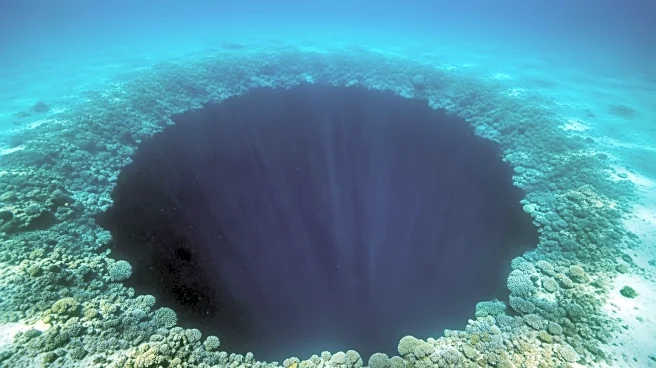
Researchers have discovered the deepest known blue hole on Earth in Chetumal Bay, Mexico. The Taam Ja’ Blue Hole, previously estimated to be 274 meters deep, has been found to exceed 420 meters, making
it the deepest underwater sinkhole recorded. Despite using advanced technology, the bottom of the blue hole remains unreached, leaving its full depth and potential secrets unknown. This discovery was detailed in a study published in Frontiers in Marine Science, highlighting the challenges and mysteries of ocean exploration.
Why It's Important?
The discovery of the Taam Ja’ Blue Hole has significant implications for marine science and exploration. Blue holes are critical habitats that support unique ecosystems, often isolated from the surrounding ocean. Understanding these environments can provide insights into marine biodiversity and the geological history of the Earth. The inability to reach the bottom of the blue hole underscores the limitations of current exploration technology and the vast unknowns that still exist in oceanic research.
What's Next?
Future expeditions may focus on developing new technologies to explore the depths of the Taam Ja’ Blue Hole and similar formations. Researchers might prioritize studying the unique ecosystems within these blue holes to better understand their biological and ecological significance. Additionally, this discovery could lead to increased interest and funding for ocean exploration, as scientists seek to uncover the mysteries hidden beneath the sea.