






What's Happening?
The Consultative Shipping Group (CSG), an international forum comprising major maritime nations, has issued a stark warning regarding the erosion of international rules governing global shipping. The group, whose members include Greece, Japan, South Korea,
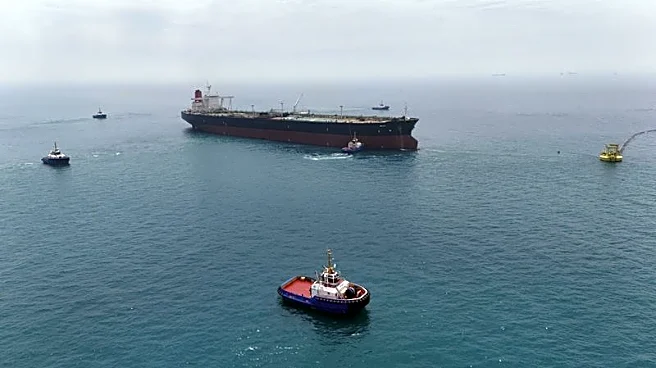
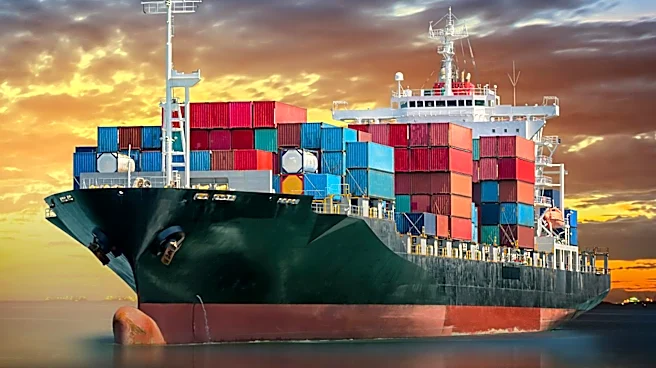
Singapore, Norway, Denmark, Germany, and the UK, highlighted that a series of disruptions—including the Covid-19 pandemic, the war in Ukraine, drought in the Panama Canal, and conflicts in the Middle East—are creating a 'two-tier system' in maritime operations. This system is characterized by one tier adhering to established rules and another operating with opacity, largely due to the proliferation of 'shadow fleets' and discriminatory trade measures. The CSG emphasized that this fragmentation undermines trust and safety at sea, leading to increased costs for businesses and consumers. The group represents over a fifth of global trade by tonnage and views maritime transport as critical infrastructure for trade, food, and energy security.
Why It's Important?
The CSG's warning is significant because it points to a fundamental shift in the global maritime operating environment, moving beyond typical market cycles. The emergence of a two-tier system, where a substantial portion of shipping operates outside conventional insurance, safety, and transparency frameworks, poses considerable risks to global supply chain stability and integrity. For U.S. industries and consumers, this could translate into higher shipping costs, increased insurance premiums, and potential delays in the delivery of goods. The use of shipping routes as geopolitical leverage, as seen in the Strait of Hormuz, challenges the long-held assumption of neutral conduits for trade, impacting long-term commercial planning. The erosion of a unified global maritime rulebook could also lead to a decline in safety standards and environmental protections, as vessels in the 'shadow fleet' may bypass these regulations, creating unfair competition and potential ecological disasters.
What's Next?
The CSG advocates for greater cooperation among maritime nations, consistent enforcement of existing international rules, improved information exchange, and renewed political backing for multilateral institutions like the International Maritime Organization. The group stresses that the solution is not to create more regulations but to apply current ones more consistently, particularly the United Nations Convention on the Law of the Sea. The ongoing discussion at events like Splash Singapore, Asia’s leading shipping conference, will further explore how organizations should adapt to this new environment where geopolitics, regulation, technology, and commercial risk intersect. Stakeholders will need to consider how to structure their operations, allocate risk, maintain rapid decision-making, and retain talent amidst poor visibility and unreliable long-established assumptions. The appeal for maritime states to defend freedom of navigation and prevent fragmentation from becoming embedded within shipping networks suggests a push for concerted international action.
Beyond the Headlines
The fragmentation of the global maritime rulebook has deeper implications beyond immediate economic costs. It signifies a broader challenge to the international order and the principles of free trade and navigation that have underpinned global commerce for decades. The rise of 'shadow fleets,' driven by sanctions and geopolitical tensions, highlights a growing trend of economic activities operating outside established legal and regulatory frameworks. This could foster a less transparent and more volatile global economy, where illicit activities and non-compliance with international standards become more prevalent. Ethically, it raises questions about accountability and responsibility when incidents occur involving vessels operating in this opaque tier. Culturally, it could lead to a decline in trust among trading partners and a more protectionist approach to maritime trade, ultimately hindering global economic integration and cooperation. The long-term shift could be towards a more fractured and less predictable global supply chain landscape.