






What's Happening?
The Lowy Institute's 2026 Pacific Aid Map reveals that Australia has surpassed China as the leading source of lending and infrastructure investment in the Pacific region. The report highlights a strategic shift by China from large-scale infrastructure loans
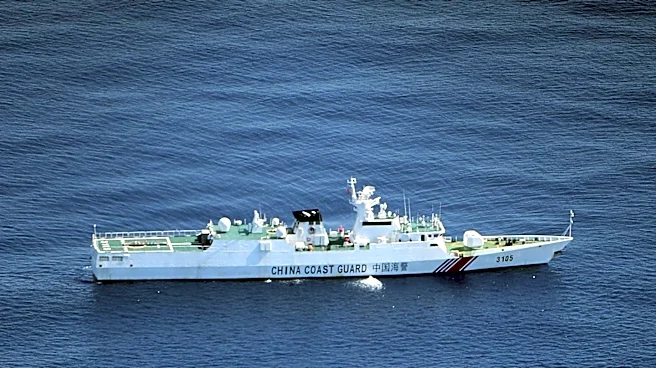
to smaller, high-frequency grants and training programs. The Pacific Aid Map, which tracks over 50,000 projects worth $60 billion in official development finance (ODF) from 2008 to 2024, shows that total ODF to the region stabilized at $4.1 billion in 2024, marking a 10% increase after three years of decline. Australia accounted for 37% of all development finance to the region in 2024, disbursing $1.5 billion, and has signed $2.4 billion in new loan agreements since 2021. Meanwhile, Chinese grant commitments reached a record high in 2024, although Chinese lending has not recovered to pre-pandemic levels.
Why It's Important?
Australia's increased aid and investment in the Pacific region signify a shift in geopolitical influence, as it overtakes China in this strategic area. This development is crucial for regional stability and economic growth, as Pacific economies face challenges from global shocks and energy insecurity. Australia's focus on infrastructure, particularly strategic projects, is reshaping the regional aid landscape. The shift in aid dynamics could impact diplomatic relations and economic policies in the region, as countries may align more closely with Australia due to its substantial financial support. The report also highlights the potential for prolonged economic slowdown in the Pacific, which could affect incomes, jobs, and food security, posing risks to governance and regional stability.
What's Next?
The ongoing contest for influence in the Pacific is likely to continue, with Australia maintaining its position as the leading aid provider. China's strategy of using aid as a diplomatic tool may lead to further shifts in regional alliances. The United States' aid cuts add uncertainty, although it has reinforced ties with key Pacific states through renewed agreements. The region's economic future will depend on how these aid dynamics evolve and how countries manage the balance between external support and internal development needs. Stakeholders will need to monitor the impact of these changes on regional stability and economic growth.