






What's Happening?
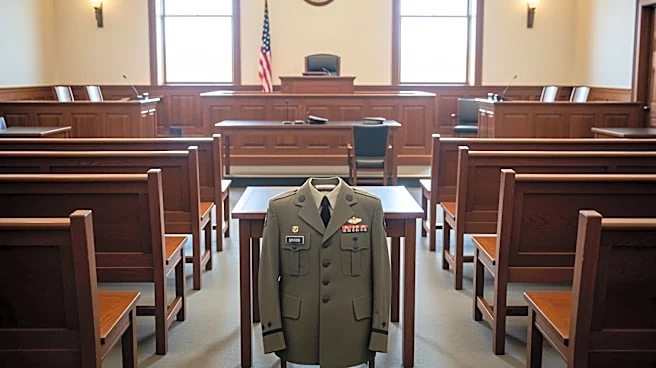
An appeals court in Washington, DC, has ruled that the U.S. military cannot expel transgender individuals from its ranks, declaring the policy unconstitutional. The decision, made by a 2-1 vote, was penned by Judge Robert Wilkins, who criticized the policy as 'arbitrary
and based upon animus,' suggesting it was motivated by a desire to harm a politically unpopular group. Despite this ruling, a ban on transgender individuals enlisting in the military remains in place. Pentagon chief Pete Hegseth, who has previously stated that transgender individuals 'cannot satisfy the rigorous standards' necessary for military service, indicated in a social media post that the case is likely to be appealed to the Supreme Court.
Why It's Important?
This ruling is significant as it challenges the military's policy on transgender service members, potentially impacting thousands of individuals currently serving or wishing to serve. The decision underscores ongoing legal and societal debates about the rights of transgender individuals in the military, a topic that has seen fluctuating policies over recent years. The potential appeal to the Supreme Court could set a precedent for future cases involving transgender rights, influencing public policy and military regulations. The outcome of this legal battle could either reinforce or dismantle existing barriers for transgender individuals in the military, affecting their ability to serve openly and without discrimination.
What's Next?
The Pentagon's response, particularly Pete Hegseth's indication of a Supreme Court appeal, suggests that the legal battle over transgender military service is far from over. If the case reaches the Supreme Court, it could result in a landmark decision that either upholds or overturns the appeals court's ruling. This would have significant implications for military policy and the broader legal landscape regarding transgender rights in the United States. Stakeholders, including advocacy groups and policymakers, will likely intensify their efforts to influence the outcome, highlighting the case's importance in the ongoing struggle for LGBTQ+ rights.