



What's Happening?
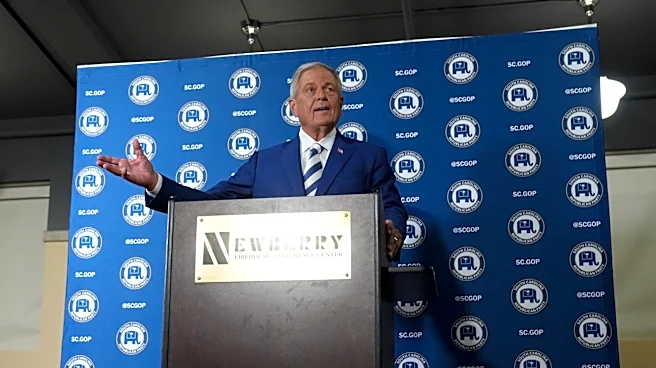
Jim Schwartzel has won the Republican Primary for Florida's Congressional District 19, succeeding U.S. Rep. Byron Donalds, who ran for Governor. Schwartzel emerged victorious from a crowded 10-candidate field, securing over 29% of the vote, while his
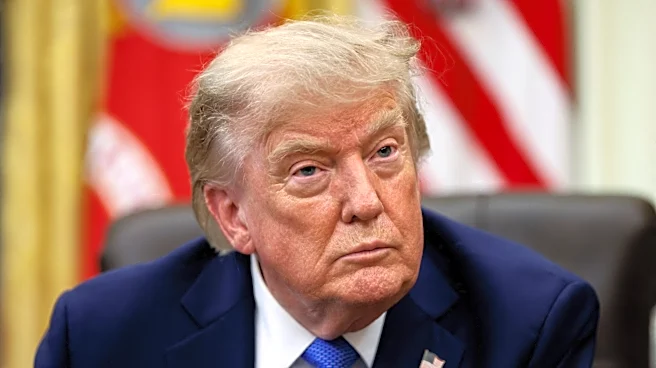
closest competitor, Catalina Lauf, garnered nearly 22%. President Trump's late endorsement of Lauf was not enough to overcome Schwartzel's lead, particularly in early voting. The primary was characterized by significant spending, with Schwartzel loaning his campaign over $1 million and raising another $1 million in contributions, spending nearly $1.9 million in total. Other candidates, including former Illinois state Sen. Jim Oberweis and former New York U.S. Rep. Chris Collins, also invested heavily, with Oberweis spending nearly $3.1 million and Collins almost $2.5 million. Lauf's campaign spent under $1.6 million. The race also highlighted a common theme of candidates who had recently moved to Southwest Florida to run for the seat, a point Schwartzel emphasized, stressing his local roots.
Why It's Important?
Schwartzel's victory in Florida's CD 19 Primary is significant as it sets the stage for the General Election in a district that heavily favors Republicans, with 64% of voters supporting President Trump in the 2024 Presidential Election. His win demonstrates that local ties and a strong campaign infrastructure can sometimes outweigh high-profile endorsements, even from President Trump. The substantial financial investment by multiple candidates underscores the perceived importance and competitiveness of this particular congressional seat within the Republican Party. The outcome also reflects a potential preference among some voters for candidates with long-standing community connections over those who have recently relocated. This election serves as a case study in the dynamics of Republican primaries, where a crowded field and significant spending can lead to a fragmented vote, and local credibility can be a decisive factor. The focus on President Trump's 'America First' agenda by Schwartzel indicates the continued influence of this political platform within the Republican Party.
What's Next?
Following his primary win, Jim Schwartzel will now advance to the General Election to face Democrat Victor Arias, who narrowly won his party's primary. Given the district's strong Republican lean, Schwartzel is widely expected to win the general election and secure the CD 19 seat. His campaign will likely continue to emphasize his commitment to President Trump's 'America First' agenda and his deep roots in Southwest Florida. The general election campaign will focus on uniting the Republican Party after a competitive primary and mobilizing the conservative voter base. Schwartzel's success could serve as a model for other Republican candidates in similar districts, highlighting the importance of local appeal and a clear alignment with the party's national platform. The outcome of this race will contribute to the overall composition of the U.S. House of Representatives and could influence future legislative priorities, particularly those aligned with conservative principles.
Beyond the Headlines
The CD 19 primary race offers a glimpse into the evolving landscape of Republican politics, particularly the interplay between national endorsements and local voter sentiment. The fact that President Trump's endorsement did not secure a win for Catalina Lauf suggests that while his influence remains strong, it is not always absolute, especially in local or state-level primaries where other factors like residency and community ties can play a significant role. The influx of candidates who had previously run for Congress in other states highlights a broader trend of political migration, where individuals seek opportunities in districts perceived as more favorable to their political aspirations. This phenomenon raises questions about carpetbagging and the authenticity of candidates' connections to the communities they seek to represent. The high spending in this primary also underscores the increasing financial demands of modern political campaigns, potentially raising concerns about the role of money in politics and access for less-funded candidates.