
What's Happening?
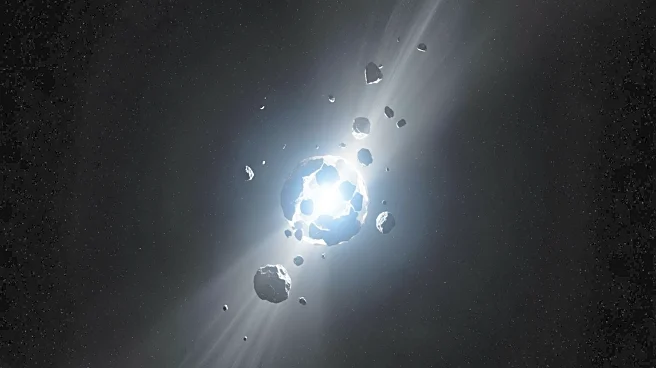
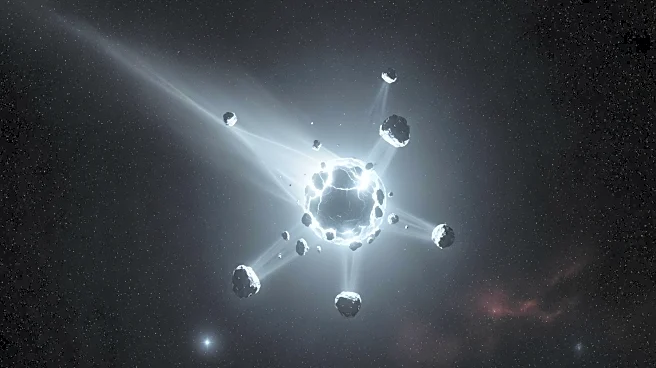
NASA's Hubble Space Telescope accidentally captured the comet K1 breaking into at least four fragments. This unexpected observation occurred as Hubble was redirected to study K1 after the original target became unviewable. The comet, formally known as C/2025
K1 (ATLAS), was observed breaking apart shortly after its closest approach to the Sun, a phase known as perihelion. The images revealed the fragments surrounded by their own comas, which ground-based telescopes could only detect as faint points of light. This event provides a rare opportunity to study the composition and behavior of comets as they disintegrate.
Why It's Important?
The observation of comet K1's breakup offers valuable insights into the physical processes that occur when comets approach the Sun. Understanding these processes can help scientists learn more about the primordial materials that formed the solar system. The event also highlights the capabilities of the Hubble Space Telescope in capturing dynamic celestial phenomena, contributing to our broader understanding of space and time. The findings could inform future research on cometary behavior and the conditions that lead to their fragmentation.
What's Next?
Researchers plan to continue analyzing the gases released by the comet to gain further insights into its chemical composition. Early observations suggest K1 has an unusual chemical makeup, with lower levels of carbon compared to most comets. Additional data from Hubble's instruments are expected to provide deeper understanding of the comet's origins and its implications for solar system formation theories. The fragments of K1, now located about 250 million miles from Earth, will continue to be monitored as they move away from the Sun.