



What's Happening?
A bipartisan group of U.S. senators met with White House border czar Tom Homan to discuss the ongoing shutdown of the Department of Homeland Security (DHS), which has persisted for over a month. The shutdown began on February 14 due to a funding lapse,
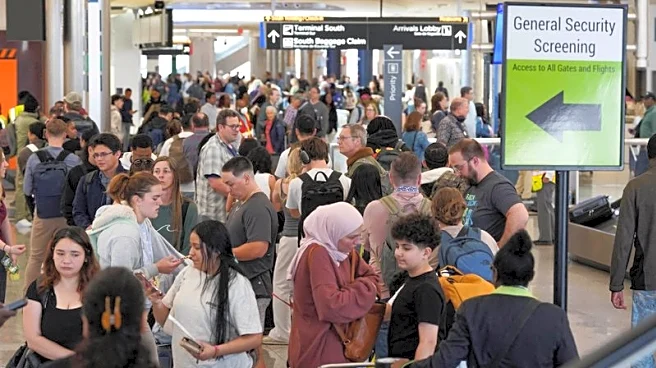
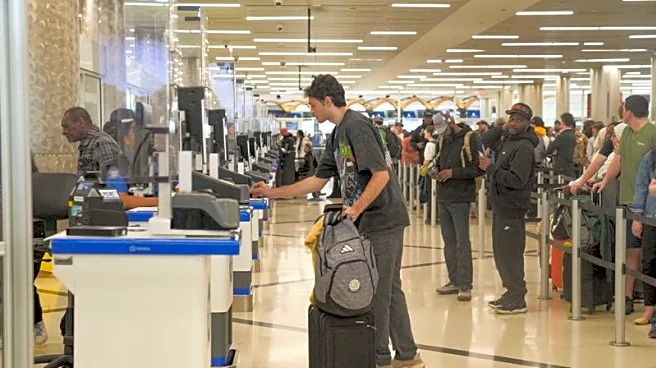
as Democrats refused to fund Immigration and Customs Enforcement (ICE) and Customs and Border Protection (CBP) without operational changes. The meeting, attended by key appropriators from both parties, is seen as a small step towards resolving the impasse. The shutdown has led to significant disruptions, particularly at airports, where Transportation Security Administration (TSA) agents are working without pay, resulting in long lines and increased absenteeism. Transportation Secretary Sean Duffy warned that the situation could worsen if the shutdown continues. Senate Majority Leader John Thune emphasized the importance of the meeting and the need for a resolution before Congress's scheduled break in April.
Why It's Important?
The DHS shutdown has significant implications for national security and public safety, as it affects the operations of critical agencies like TSA, FEMA, and the Coast Guard. The shutdown also impacts the livelihoods of over 120,000 DHS employees working without pay, potentially leading to increased absenteeism and operational inefficiencies. The political standoff highlights the broader debate over immigration policy and enforcement, with Democrats demanding changes to ICE and CBP operations, including increased oversight and restrictions on enforcement activities. The resolution of this shutdown is crucial to restoring normalcy at airports and ensuring the continued functioning of essential security services.
What's Next?
The next steps involve a White House counteroffer, followed by further negotiations among lawmakers. Both parties remain far apart on key issues, but the involvement of the White House in the talks is seen as a positive development. If a resolution is not reached soon, Congress's planned recess in April may be jeopardized. The ongoing discussions will likely focus on finding a compromise that addresses Democratic demands for operational changes at ICE and CBP while ensuring the continued funding of DHS. The outcome of these negotiations will have significant implications for U.S. immigration policy and the functioning of national security agencies.